Ambrogio Beccaria and Corentin Horeau: two very different characters in the same boat in the Route du Rhum
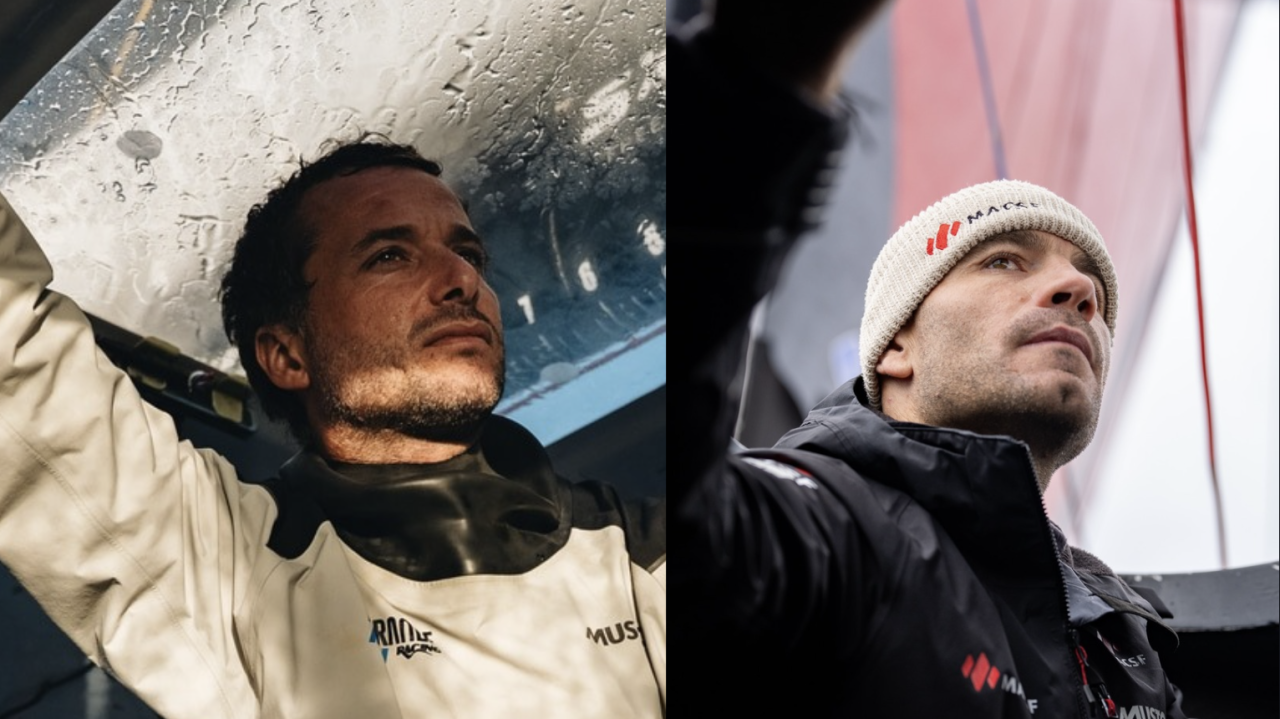
If you’re looking for self-belief, positivity, confidence but not arrogance, look no further than the charismatic Italian skipper Ambrogio Beccaria who starts the Route du Rhum-Destination Guadeloupe on Sunday among the favourites in the 22-strong IMOCA Class.
The sailor from Milan has enjoyed a superb second season in IMOCA at the helm of Allagrande MAPEI - formerly For People designed by Antoine Koch and Finot Conq. And he has past form on the transatlantic course, having won the Mini Transat, and been second in the Route du Rhum and then won the Transat Café L’OR in Class 40s.
Now he is ready to take that experience into his first IMOCA Route du Rhum, plus everything he has learned this season that saw him sail to a thrilling solo victory in the Vendée Arctique-Les Sables d’Olonne race ahead of Sam Goodchild, and then finish second to the MACIF Santé Prévoyance skipper in the Défi Azimut 48 Hours.
Beccaria and his team have also been busy with modifications to their boat this year, changing the foil position and adding new foils amongst other improvements, and this race will be the first full test, after the Défi Azimut, of its new configuration.
Most IMOCA skippers talk of a work in progress when asked about their pre-start preparations and there are always things to improve, but the ebullient Beccaria, 35, projects only contentment and self-belief. “I feel very ready and I know the boat very well,” he told the Class in St Malo. “I am starting to love this boat with this new configuration - I know her very well. At the beginning of the year I would have loved to be in this situation after 10 months.
“We are here in St Malo,” he continued, “and we have done everything we could to be the best as possible. And yeah, I would not change anything about the preparation we did this year, so I am very proud of our position today.”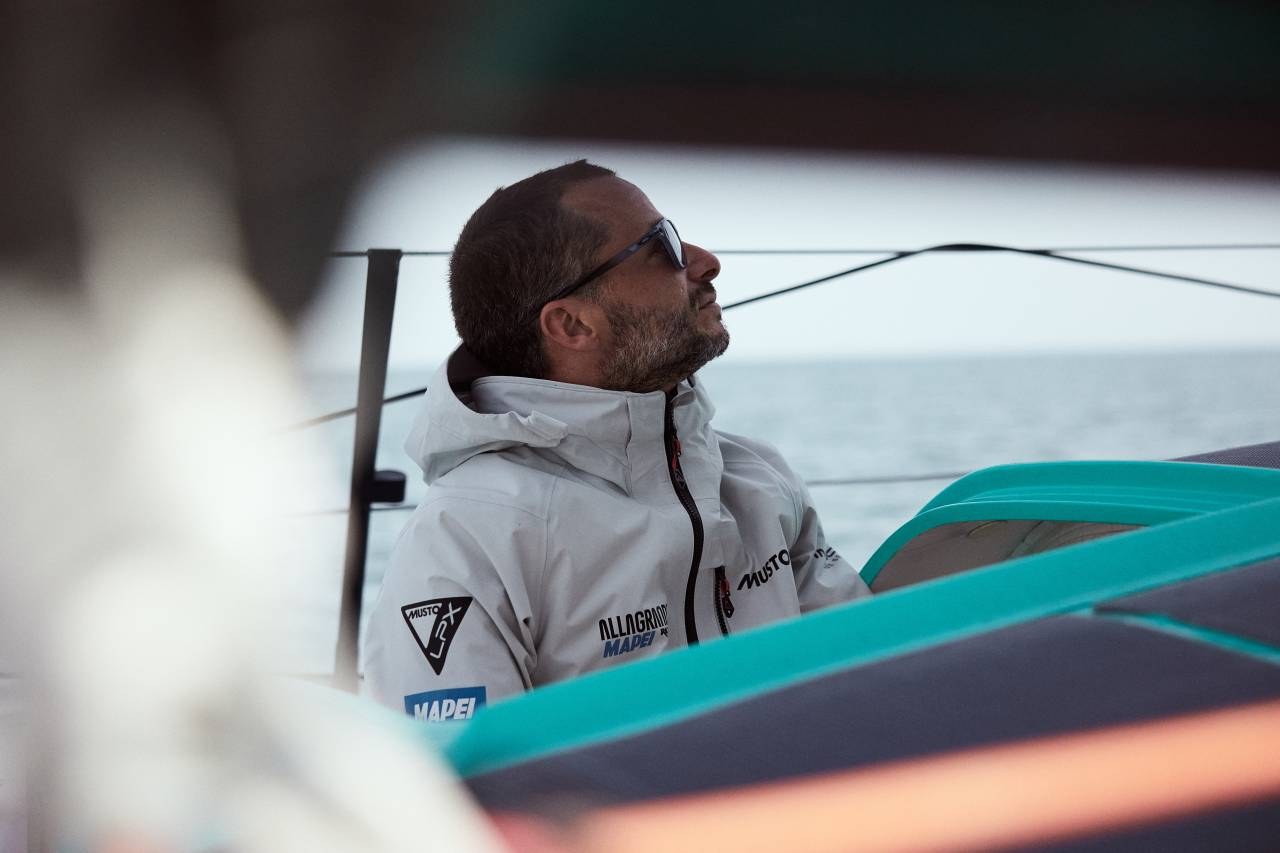 © Anne Beauge / Allagrande Mapei
Beccaria says the new foils have made an already super-fast hull even faster downwind, while improving her reaching capability too. He says the boat’s performance to windward is also improving. “It was easy to understand how the foils work downwind and reaching and stuff,” he summarised, “it was more complicated to understand how they were working upwind, but now I think I understand something, so I am getting better.”
One of the compelling features of the 2026 season has been Beccaria’s battle with Goodchild who will start his last race on board MACIF as the out-and-out favourite. But Beccaria says the Anglo-French skipper is not his only concern on the 3,540-nautical mile course to Pointe-à-Pitre in Guadeloupe.
“Actually I am not thinking about that because it can be a problem if you focus only on Sam,”he explained. “Something I would like to do, which is not easy to do, but which I think I am quite good at, is to sail free in my mind and not to think about the others because sometimes they are going to be faster, sometimes slower. But this is not why you should accelerate or slow down. I have tried to concentrate on myself and on my route to be as clean as possible, and to put all the energy that I have into this race.”
Among those lining up against Beccaria is the 37-year-old Frenchman Corentin Horeau whose MACSF - formerly Paprec Arkéa - is a sistership of Beccaria’s boat. For Horeau, a vastly experienced Solitaire du Figaro sailor who won that title in 2023, this will be his first Route du Rhum at the end of his first solo season in IMOCA.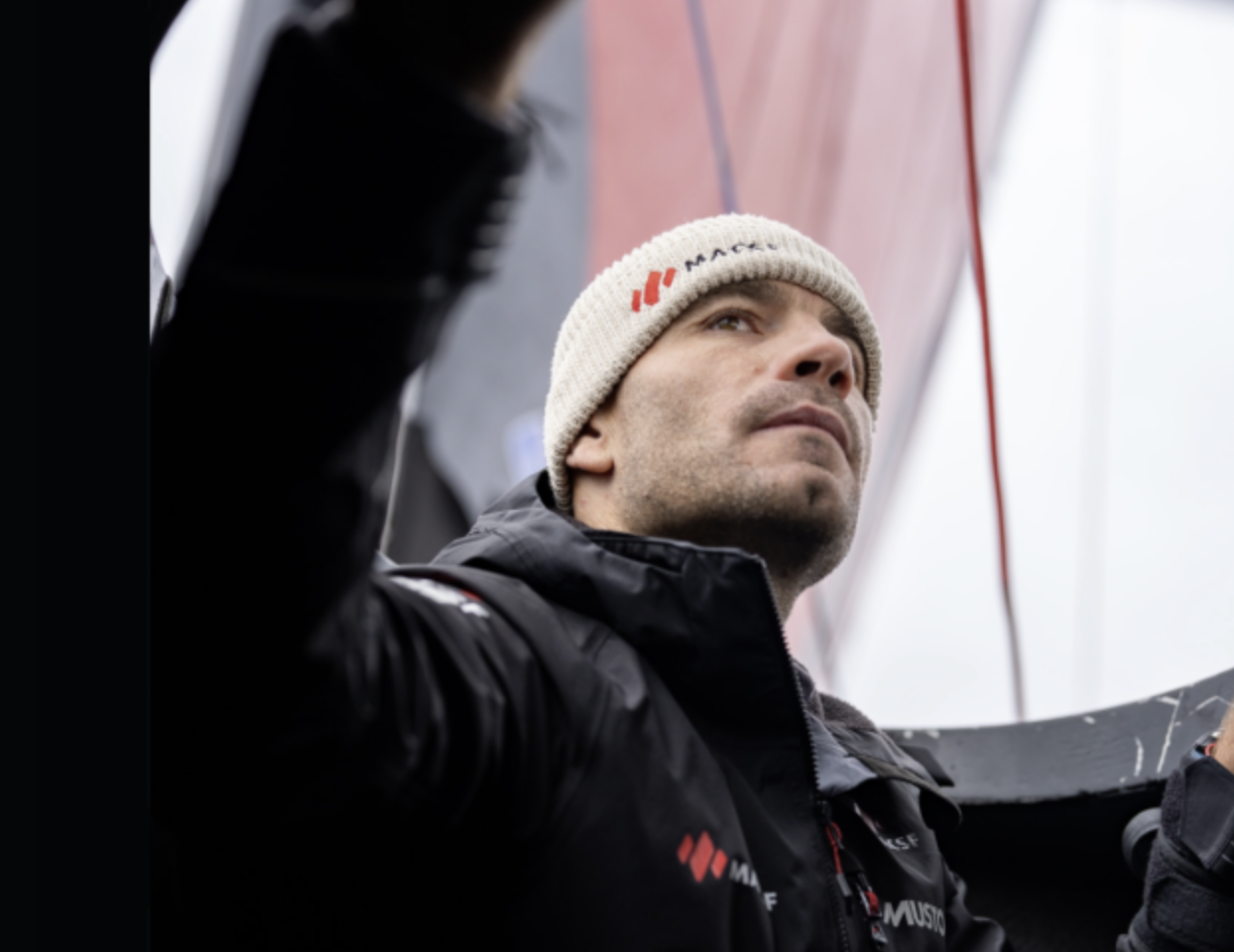 © Gauthier Le Bec / MACSF
In comparison to Beccaria, the Frenchman who finished second in the season-opening 1000 Race but then had to retire from the Vendée Arctique when the staysail stay pulled out of the foredeck, is a far more cautious individual. Horeau makes no secret of the fact that he is still finding his feet on the boat that Yoann Richomme sailed to second place in the last Vendée Globe.
We asked him if he feels pressure to deliver a strong result in this race. “No, not really,” he replied. “Listen, it’s my first year, so you have to be kind to yourself. Of course, I want to do well, just as I’ve always wanted to do well ever since I started sailing. But there are plenty of things you can’t control, and that’s the very nature of offshore racing. So no, I don’t feel any particular pressure - it’s just that I like to do things properly to give it my best shot, so that’s what we’re going to try to do.”
For Horeau the focus has not been on modifications to the boat - though he has new sails - but on reliability and getting to know it inside out which has helped build his confidence. “You need to trust your boat and, well, almost become one with it,” he explained. “When you know your boat like the back of your hand, you feel confident and know exactly what you need to do to make it go faster, slow it down, change course, and so on. That was one of our goals for this year.”
In the build-up to this race he has been working with Pascal Bidégorry, one of the most experienced offshore “boat whisperers” in French pro sailing, and Horeau says he is feeling strong on the eve of the start. “I think we’re arriving at the Route du Rhum ready to go, and we’re happy with what we’ve achieved. The whole team wants this to work and everyone is fully committed, which is already a very positive thing,” he said. 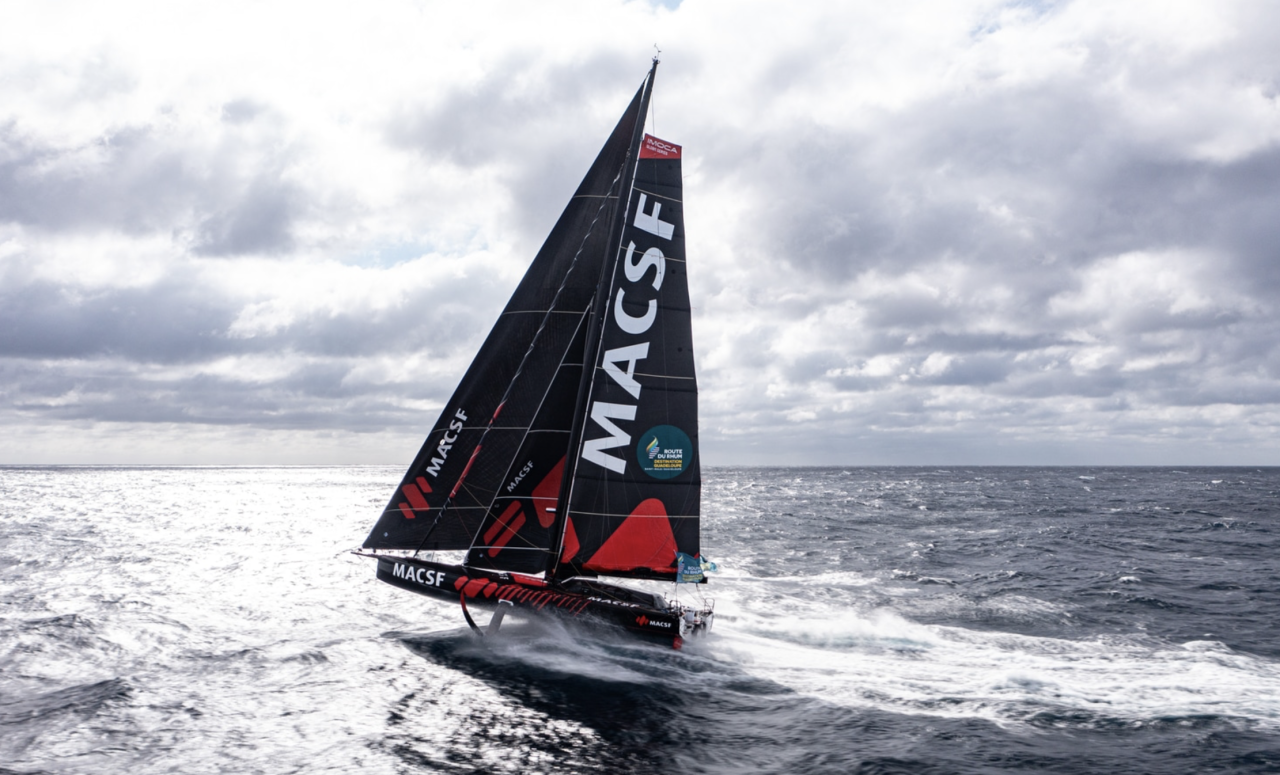 © Gauthier Le Bec / MACSF
Horeau’s years of racing in the one-design Figaro class, when he sailed in a boat that was identical to his rivals, has left its mark on the MACSF skipper and has made IMOCA racing harder for him to get used to. “I need to put things into perspective and accept that we don’t all have the same boats. It’s not necessarily a problem if I’m slower than a competitor at certain points in the race. That’s something new for me this year, so I’m trying to get my head around it. Little by little, it’s sinking in,” he said.
The early stages of this Route du Rhum are going to feature a fast downwind departure and then a complex weather picture to tackle as the skippers approach the Azores. Beccaria says he would “pay” for a forecast like this, but he adds that racing downwind from the start will bring pressures of its own.
“To sail downwind can sometimes be more stressful than upwind because now these boats are sailing at 30 knots of boatspeed downwind,” he said. “So to be faster downwind is hard - it is very hard on the physics and, for me, it is the most difficult mode, finding the right sail configuration and the right appendage configuration - so it demands more energy.”
Beccaria reckons the Azores will be the first big strategic challenge for the IMOCA skippers who sail this race without shore-based routing advice. “This time there is also going to be a huge zone that is forbidden (to protect sea life around the Azores), so the first big gate is going to be the Azores,” he said. “Are you going to pass north or pass south? And then there is obviously the reliability of the Trade Winds - are they going to be there nor not? And after that, there is the finish and for the arrival you need a good position - you have to arrive with a good angle, with good pressure and so on, and be ready to go round the island which is always quite tricky.”
Horeau is also delighted the IMOCA fleet is not facing a boat breaking beat upwind into a depression at the start of the 13th edition of this classic. “That’s good,” he said, “because the prospect of getting battered for three days would inevitably add to the stress. As things stand, we’re expecting relatively pleasant conditions, although the forecast could still change a little,” he added.
Ed Gorman
Teams info
In the Azores, Ambrogio Beccaria looks back on a Route du Rhum cut brutally short
Horta, 9 November 2026 – After a masterful start and an opening phase spent in the leading group, a fall on board forced the skipper of Allagrande Mapei to withdraw from the Route du Rhum – Destination Guadeloupe.
•••Launch of the “Votre Épargne Autour du Monde” crowdfunded loan with Louis Duc
At the end of October, skipper Louis Duc launched the crowdfunded loan “Votre Épargne Autour du Monde 2028” (“Your Savings Around the World 2028”) to finance the compliance upgrade of his new IMOCA.
•••


