
IMOCA stages student design workshop competition in Lorient to promote sustainable boat building
While six crews were racing to the finish of The Ocean Race Atlantic last week, the IMOCA Class was preparing to host an innovative workshop featuring students tackling a sustainable solution to IMOCA coachroof design.
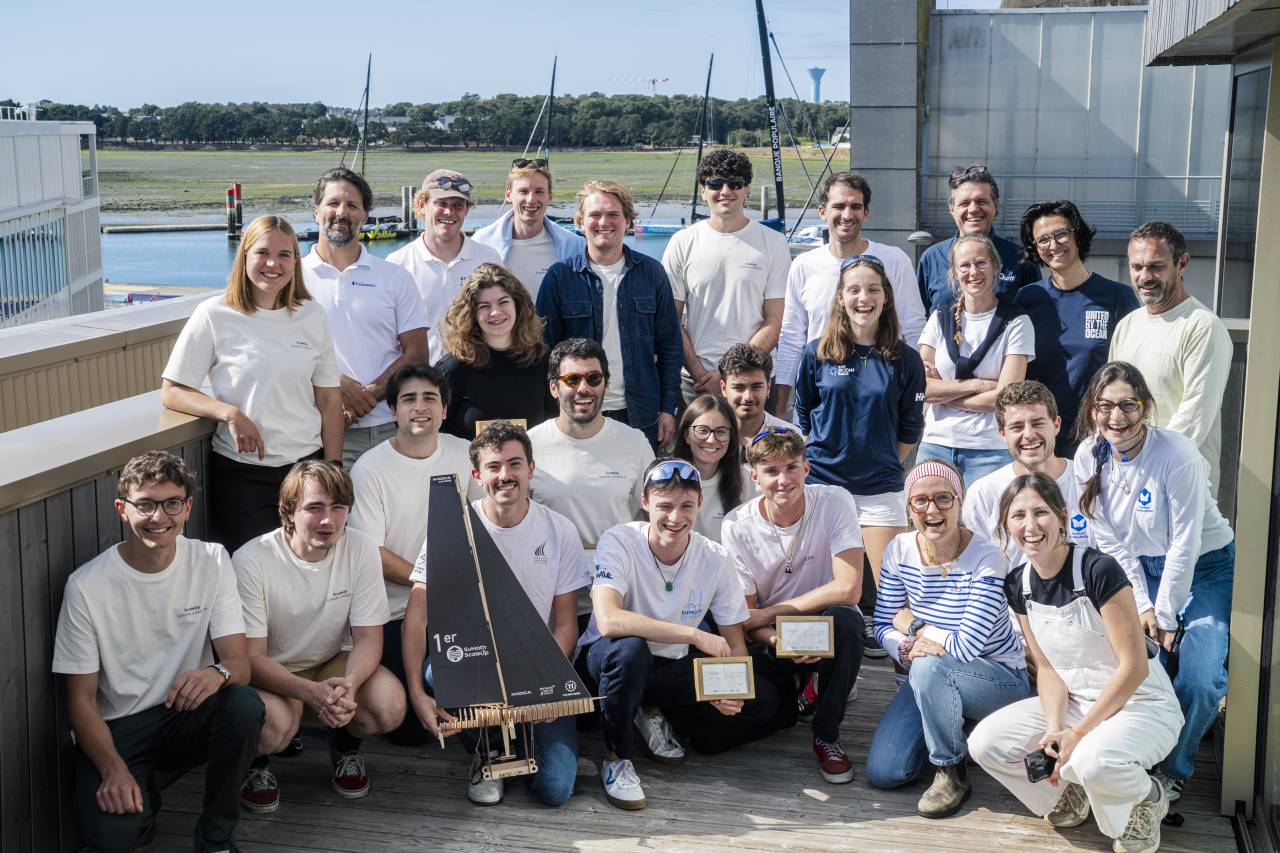
The two-day ScaleUp: SuMoth x IMOCA workshop was held over Friday and Saturday at La Base, the IMOCA base in Lorient, and featured 16 engineering students from six different SuMoth Challenge teams around Europe. They were given the task of coming up with sustainably oriented alternatives to the carbon-fibre coachroof currently in use in the IMOCA fleet.
In an initiative backed by 11th Hour Racing, which partners with IMOCA to advance sustainability across the class, the students were selected from design teams that had previously entered an annual competition to design, build and sail their own sustainably oriented prototype of a foiling Moth dinghy.
 © Eloi Stichelbaut - polaRYSE
Known as the SuMoth (Sustainable Moth) Challenge, this competition was started in 2019 and has attracted hundreds of talented young student engineers drawn by the challenge of trying to build a sustainably oriented alternative to carbon fibre Moth production boats. The ultimate goal is to promote change at a larger scale from the ground up.
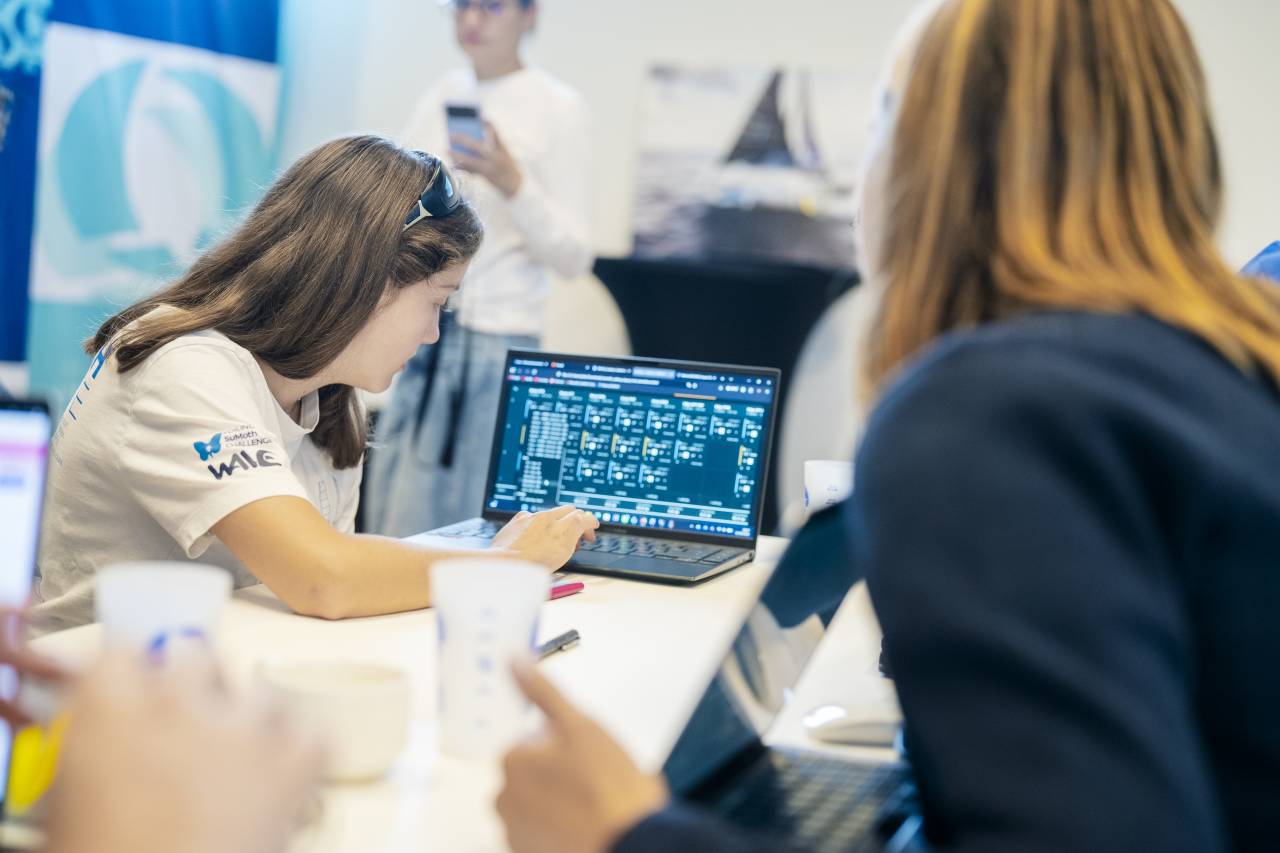
Six teams of students came to Lorient to prepare a report based on their solution to the coachroof of an IMOCA which, while not part of the boat's primary structure, is nevertheless a critical element in a boat's above-water profile. The students had to come up with a proposal that they had previously shown was practicable in their SuMoth design work, and then tested it via finite element analysis (FEM) and a life-cycle assessment (LCA) using MarineShift360.
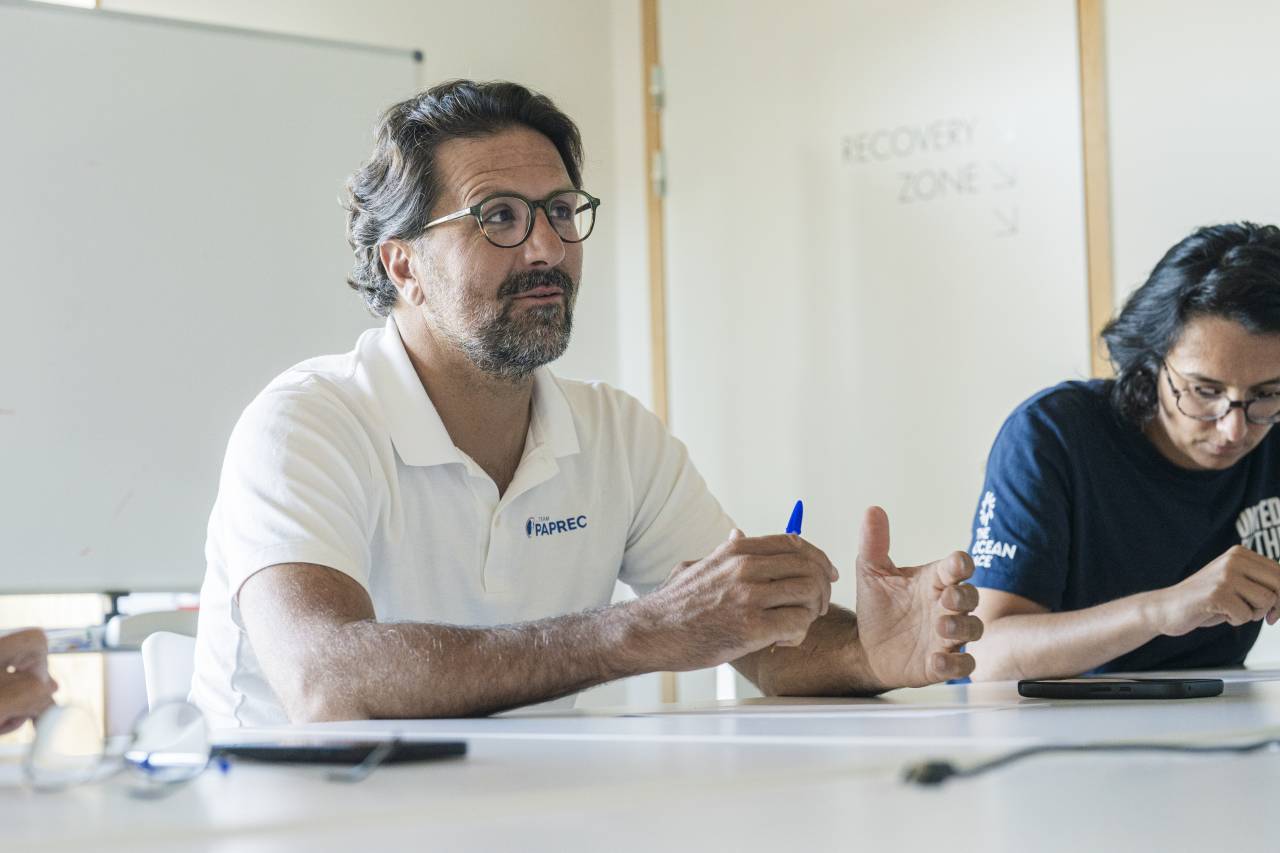
The reports were presented to a jury spanning IMOCA's class and technical teams, Gurit and MarineShift360: IMOCA's Marie Van Den Heede, Gurit's engineering chief Paolo Manganelli, MarineShift360's Lizzy Howard, United by the Ocean's Alizée Vauquelin, Arnaud Cacquevel of Bretagne Next, SuMoth's Bruno Giuntoli, and Paprec Arkéa skipper and 2024-'25 Vendée Globe runner-up Yoann Richomme.
The winning team, working under the name "SuSkeletton," was made up of students from the ESTACA Engineering School, the Polytechnic of Turin, the Technical University of Munich, Chalmers University of Technology in Sweden and the École Centrale de Nantes. They came up with a design based on a material concept that the jury concluded differentiated them from their rivals based on real-life practices.
Their solution proposed a coachroof with a recycled PET foam core, the use of carbon fibre in critical areas and basalt fibre in other areas. It would be manufactured using a partially bio-based Gurit resin in a large-scale, 3D-printed mould.
Richomme was impressed by what he was asked to evaluate. "This challenge is great because it allows these students from international schools to have a taste of what it's like to design a big IMOCA part and to try and make it sustainable," he said. "It's the vision we have at IMOCA to make our boats more sustainable in future and maybe, one day, one of these students will help us achieve that."
 © Eloi Stichelbaut - polaRYSE
Arthur Edmond, one of the students involved in the competition from ESTACA Engineering School near Paris, was part of a team that suggested a cork-based core for their coachroof. He enjoyed the challenge of bringing ideas learnt with the SuMoth competition to the IMOCA Class.
"We explored several different options and quickly ruled some of them out," Edmond explained. "Since we all come from different teams, we have slightly different experiences, which allows us to move quite quickly. We all made a few mistakes when building our respective boats for the last SuMoth, so we know that certain approaches don't lead anywhere - that means we can quickly identify the right direction to explore."
The SuMoth Challenge was created by Bruno Giuntoli, drawing on his own experience building a fully foiling rigid-wing C-Class catamaran as a student in the 2015 Little Cup. He was delighted to respond to an invitation from Imogen Dinham-Price, IMOCA's Sustainability Manager, to run a similar small-scale workshop with IMOCA.
Bruno said this exercise was a great way to rethink and imagine new sustainably oriented construction and materials solutions for IMOCA that might be used in future. He was impressed with the way the student team members selected for the challenge worked so well together, especially since they'd only met their teammates on arrival at La Base.
"Actually, the work these guys have done in, like, 20 hours was impressive,"he said. "We went from brainstorming concepts to designing the structural part, Finite Element testing and doing a life-cycle assessment. And then putting that into a report and then a presentation - it was great."
Richomme, meanwhile, underlined how important innovative and low impact solutions in IMOCA boat building already are. He said even with his new boat (designed by Antoine Koch, GSEA and Finot-Conq) which is currently being built, the Class's CO2 emission targets have made for tough choices.
"So we are confronted with situations like this challenge, where we have to make technological choices between different materials to make sure that we hit the target," he said. "We did make improvements on our boat with, for example, the technology of the deck mould, which has never been done before at such a size. So it was a big challenge for us,"he added.
 © Eloi Stichelbaut - polaRYSE
Teams info
Countdown begins as The Ocean Race sets its sights on 2027 start in Alicante
Following The Ocean Race Atlantic, attention shifts to Alicante, the Puerto de Salida (start port) for the around the world race
•••Thomas Ruyant: “I will not be at the start of the next Route du Rhum”
My disappointment is immense. This race holds a special place in my history. I have competed in it and won it twice. As the defending champion, I was obviously very keen to come back and defend that victory.
•••


