
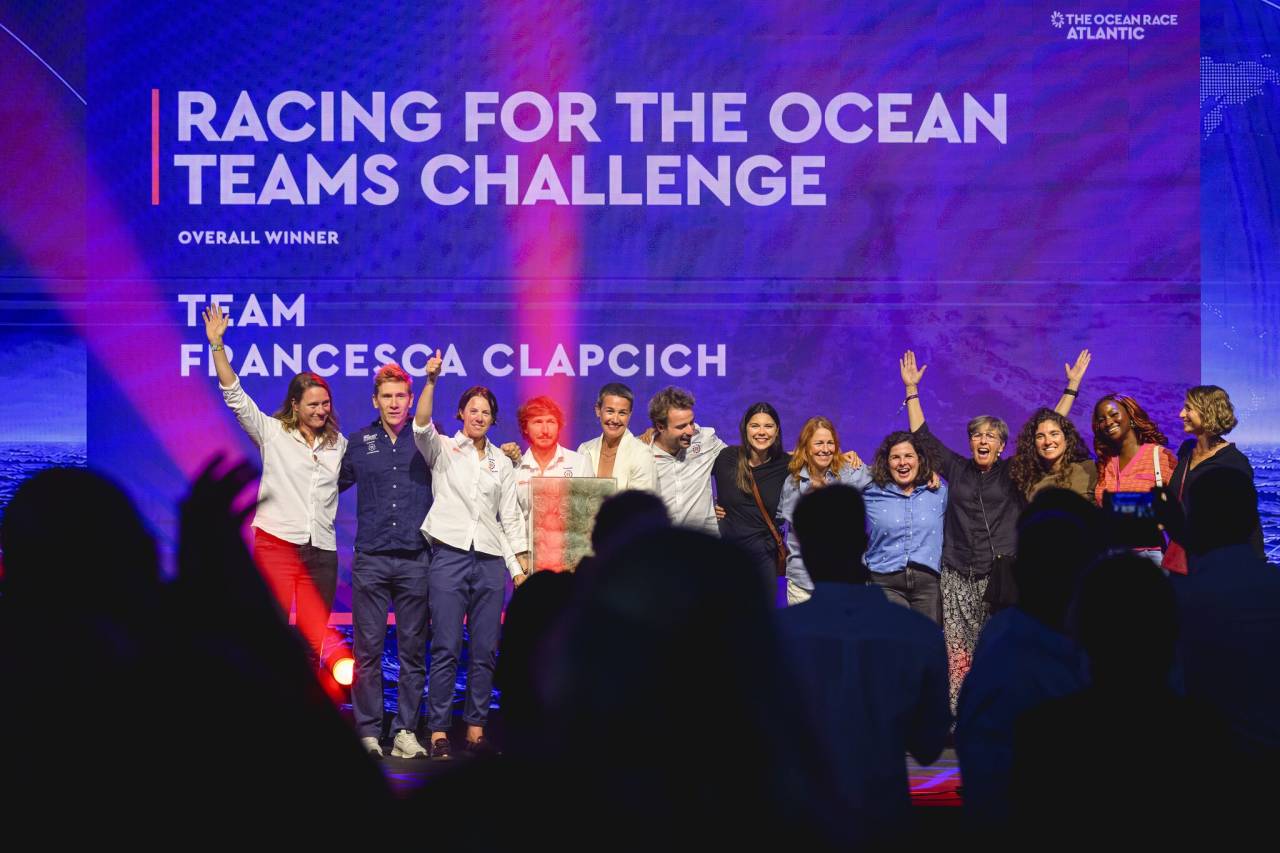
Team Francesca Clapcich wins the Racing for the Ocean Teams Challenge Trophy in The Ocean Race Atlantic
The Ocean Race Atlantic from New York to Lorient saw six IMOCA crews battling it out on the high seas, with some spectacular racing in challenging conditions.
But the 3,200-nautical mile dash across the north Atlantic won by Paul Meilhat and his crew on United by the Ocean was not the only competition between them.
All six teams in the race also took part in the Racing for the Ocean Teams Challenge which measured how effective each team was at reducing their environmental footprint and creating a lasting positive impact beyond the race.
This competition, which was created by the Ocean Race Atlantic in collaboration with IMOCA, saw each of the six teams measured against 30 sustainability criteria including operations, science, education, sustainable boat building, climate impact and advocacy.
Today in Lorient at The Ocean Race Atlantic Awards Night, it was announced that Francesca Clapcich’s powered by 11th Hour Racing which came second in the race on the water, had won the Racing for the Ocean Teams Challenge.
They were presented with the Racing for the Ocean Teams Challenge Trophy which is crafted from re-cycled plastic. They also received a cheque for one thousand euros to be donated to the team’s impact partner project, aimed at supporting positive environmental and social change.
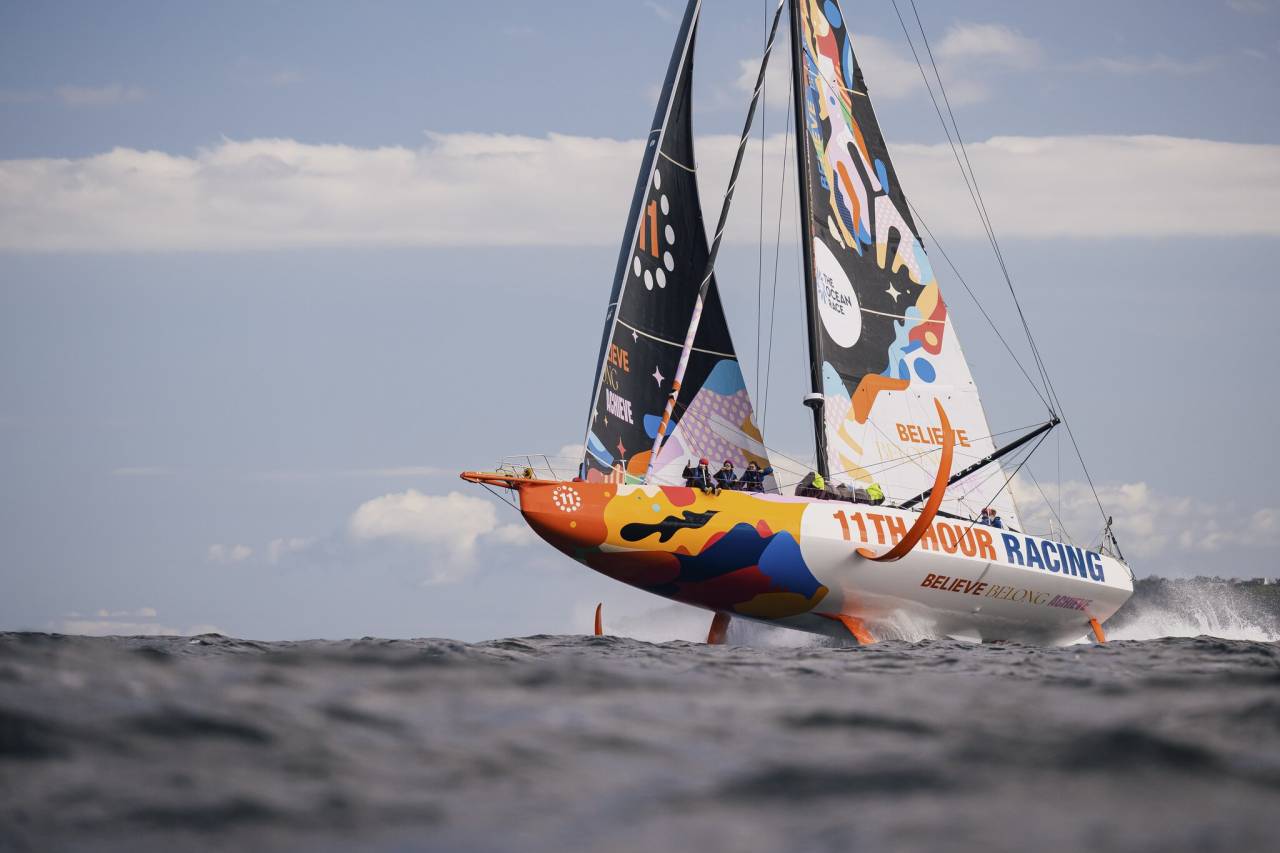
Emily Caroe, the Team Francesca Clapcich Powered by 11th Hour Racing Communications & Purpose Director, said the team was delighted to wint he award. “At team Francesca Clapcich our performance campaign is absolutely intertwined with our purpose campaign, which aims to create a positive impact with the communities we interact with, the ocean we sail through and the events that we take part in,” she said.
“It’s not enough to just be focusing on minimising our impact and footprint, it is about having a positive impact everywhere that we operate and visit. Francesca is an absolute leader for us in this respect and these values are absolutely integrated in every department throughout our campaign,”Caroe added.
Caroe also made the point that a high profile professional sports team like Team Francesca Clapcich Powered by 11th Hour Racing can have a positive influence on people’s behaviour by demonstrating what can be done to minimise their environmental footprint and promote positive change. “We can use Francesca’s profile and our team profile to not only raise awareness about the importance of creating positive impact, but also providing solutions for positive change,” Caroe said.
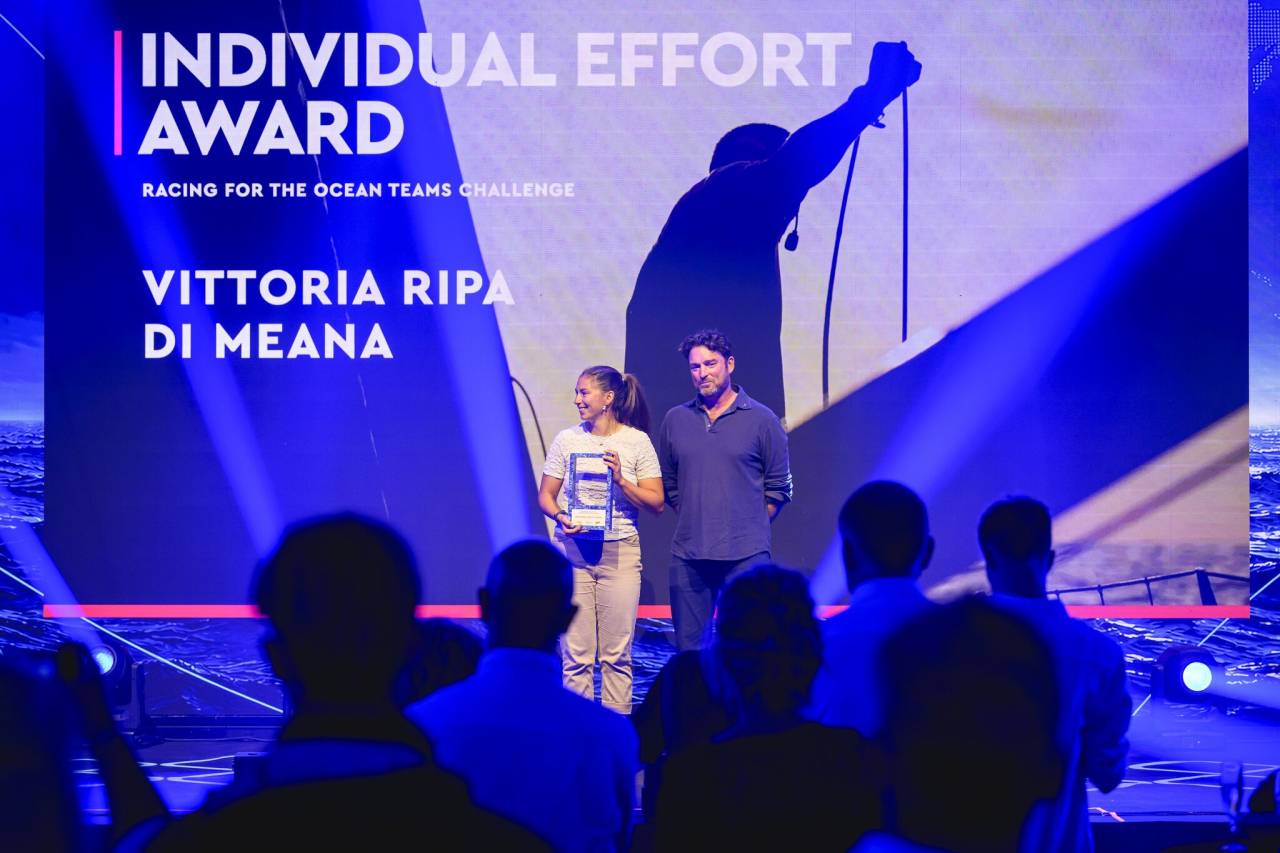
This year’s competition is the second time this initiative has been tried. Last year The Ocean Race Europe saw the first ever Racing for the Oceans Teams Challenge with Holcim-PRB taking the trophy. This time the competition has been widened to include an award for the lowest carbon footprint, which went to United by the Ocean; the best effort by an individual team member - Vittoria Ripa Di Meana from United by the Ocean; support for access and equity - Team Francesca Clapcich Powered by 11th Hour Racing and Team Malizia and the most effective ocean science communication, which went to the MSIG team.
Louise Kergomard, Head of Logistics and circularity at Team Francesca Clapcich Powered by 11th Hour Racing, spoke about some of the steps taken by her team that contributed to their winning the overall award. She said logistics was one of the most important areas because it is one of the biggest sources of emissions.
“Overall, it means looking at whether we can share or pool certain things with other teams, which is something we have done in quite a few instances,” she said. “For example, with the RIBs and the container used to transport equipment (to the USA) - we shared that with Team Malizia. And with catering in New York, we shared that with DMG Mori Global One and Team Malizia.”
In terms of getting around, between the race village and the places where team members were staying, the team tried to avoid using taxis or cars where possible. “It’s quite easy sometimes to say ‘Let’s just take an Uber from point A to point B because it’s quick and efficient,’”explained Kergomard. “But there are other options like walking or cycling. The first thing, though, is you need to find accommodation for team members that isn’t too far away, so that everyone can actually use more sustainable ways of getting around.”
The team also focused on food and the packaging and containers it came in. They used Bento boxes and reusable containers for lunchtime catering. “Obvisouly, it’s a bit more inconvenient for everyone to think ‘OK, I need to remember to bring my Bento box back at lunchtime, and I need to remember to wash it after using it.’ But, at the same time, I think it’s also important to realise that by doing that, we avoided using plastic and single-use packaging,” said Kergomard.
Team Francesca Clapcich Powered by 11th Hour Racing is very focused on waste management at all the sites where the team works and they were impressed with the system put in place in this respect in New York at the race village by the race organiser.
Kergomard said, when looked at overall, all the small changes in behaviour by the team add up to important ways of reducing impact. “Reducing our impact is a major societal issue at the moment, I think we’re all somewhat concerned about this,” she said. “It’s one of the key aspects that we highlight as part of our project, so it’s important for us to be exemplary in this area, and to make as much effort as possible across all the areas where we can actually have an impact.”
Lucy Hunt, Ocean Impact Director at The Ocean Race, said sailors in the Ocean Race spend more time at sea than almost anyone else, so when it comes to pressures on the ocean, for example, they understand this issue from firsthand experience. “This gives them a unique platform to inspire others, speak authentically about why the ocean matters and explain why protecting it is so important,” said Hunt.
“Many of the teams are already leading initiatives in ocean health and climate action, and the Racing for the Ocean Teams Challenge is designed to recognise those efforts, encourage them to go even further, and motivate others to take action alongside them. By making this a competition, we’re showing that success in our sport isn’t just about crossing the finish line first, it’s also about the positive impact teams can have beyond the racecourse,” Hunt added.
Teams info
Countdown begins as The Ocean Race sets its sights on 2027 start in Alicante
Following The Ocean Race Atlantic, attention shifts to Alicante, the Puerto de Salida (start port) for the around the world race
•••Thomas Ruyant: “I will not be at the start of the next Route du Rhum”
My disappointment is immense. This race holds a special place in my history. I have competed in it and won it twice. As the defending champion, I was obviously very keen to come back and defend that victory.
•••


