WHEN OCEAN RACING SETS COURSE FOR SCIENCE
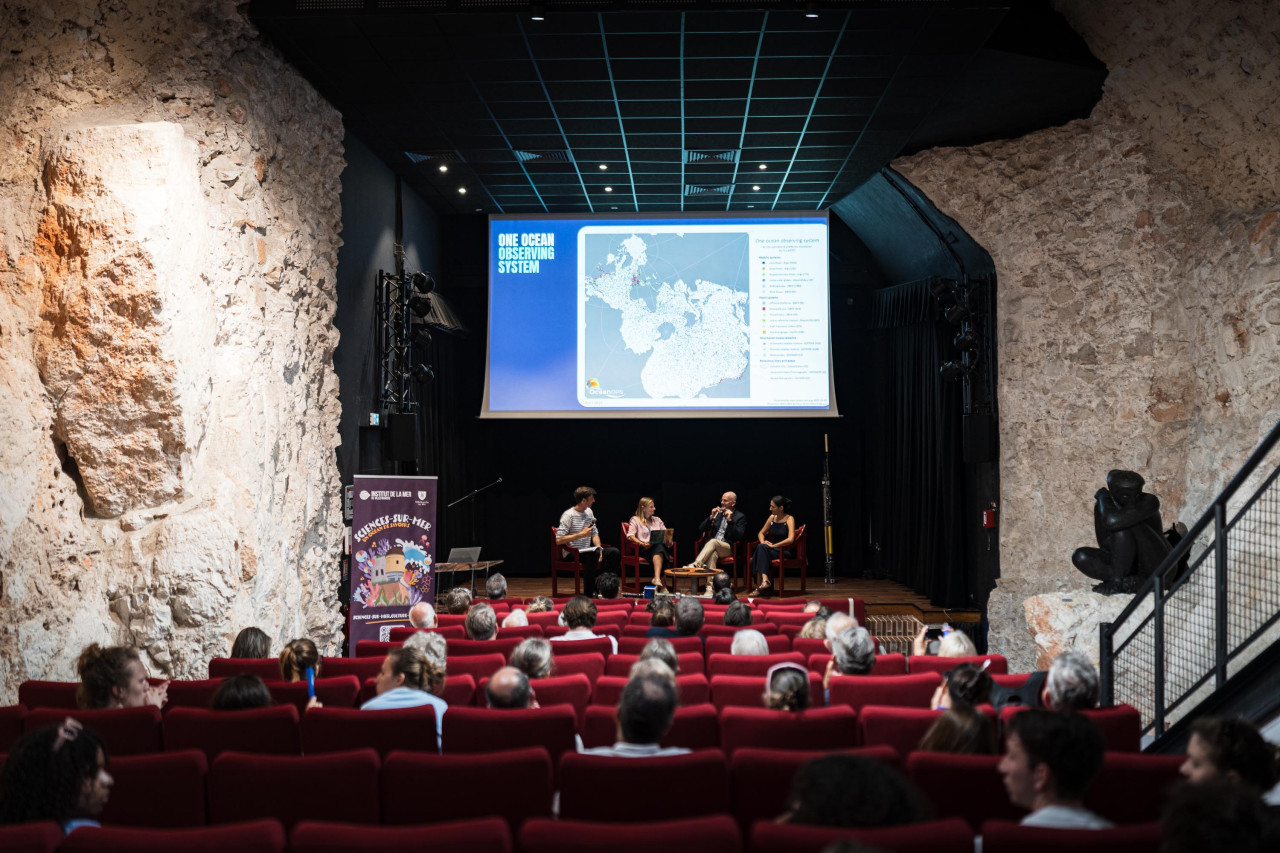
On June 11, 2025, on the occasion of the 3rd United Nations Ocean Conference (UNOC), the IMOCA Class and Ifremer co-organized a side event at the Institut de la Mer in Villefranche-sur-Mer (IMEV).
Entitled "At the Heart of the Ocean, in Service of Science", the event brought together scientists and sailors around a shared goal: transforming ocean racing into a driving force for research and environmental action.
THE URGENT NEED TO BETTER UNDERSTAND THE OCEAN
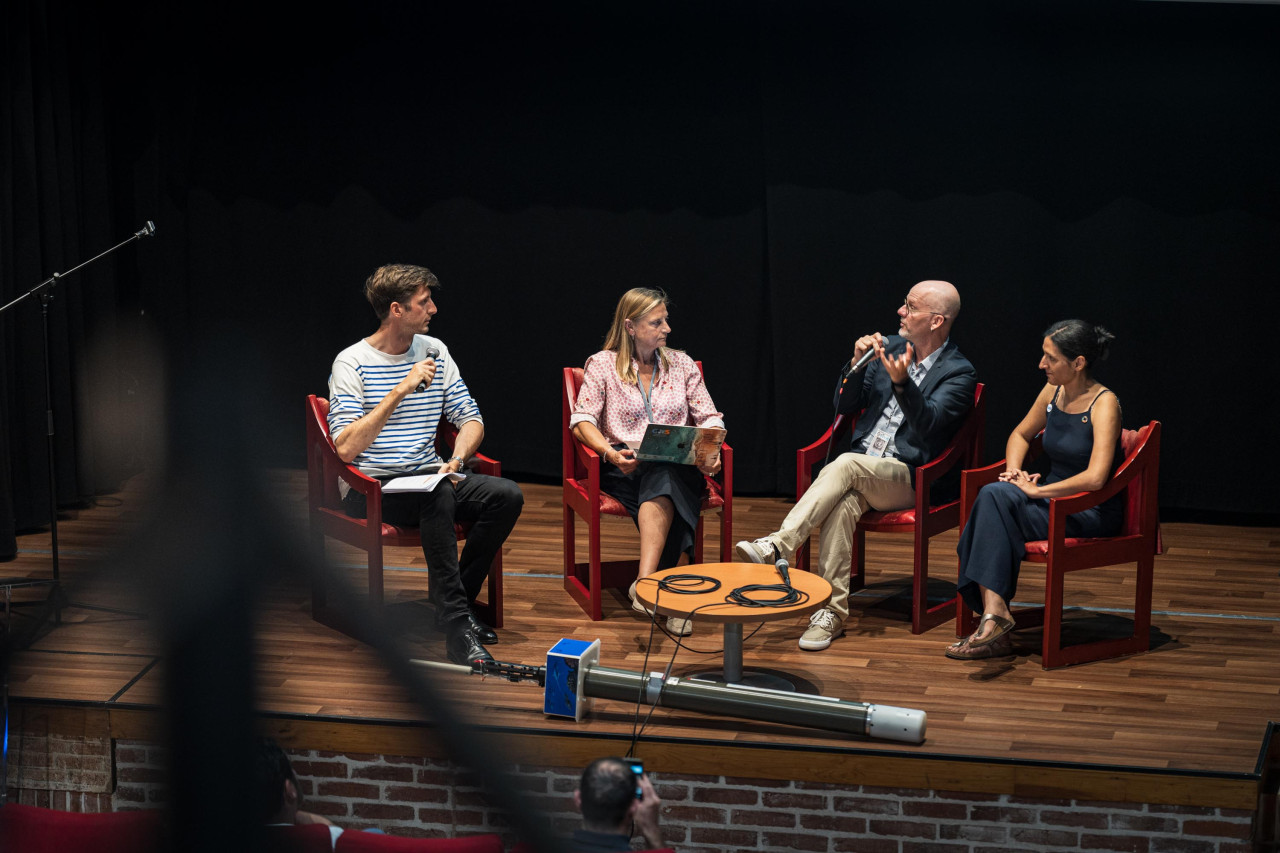
From the very start, scientific voices set the tone. Emma Heslop, an expert with the GOOS (Global Ocean Observing System) program at IOC-UNESCO, highlighted the ambitions of the United Nations Decade of Ocean Science for Sustainable Development (2021–2030). This UN initiative calls on all stakeholders — researchers, governments, NGOs, businesses, and citizens — to unite around a shared vision: to reverse the decline in ocean health through better knowledge and to translate that knowledge into concrete policies.
Far from abstract rhetoric, this ambition is embodied in clear challenges: fighting pollution, restoring ecosystems, adapting to climate hazards — all of which require precise, regular, and accessible data.
Martin Kramp, a coordinator at OceanOPS, shed light on the complexity of this challenge. From Brest, his team oversees a global network of 10,000 sensors — buoys, Argo floats, tide gauges, and even marine animals — that continuously feed forecasting systems and research programs. But certain areas, especially in high latitudes and the Southern Ocean, remain largely out of reach. This is where racing yachts, such as those of the IMOCA fleet, come into play.
"They are the only sporting fleet that regularly sails around Antarctica. They reach unexplored areas where our instruments struggle to go," Kramp points out. The IMOCA boats thus become scientific pathfinders, sailing close to the great unknowns of the global ocean.
 © Julien Champolion - polaRYSE
THE CRITICAL PERSPECTIVE OF RESEARCHERS
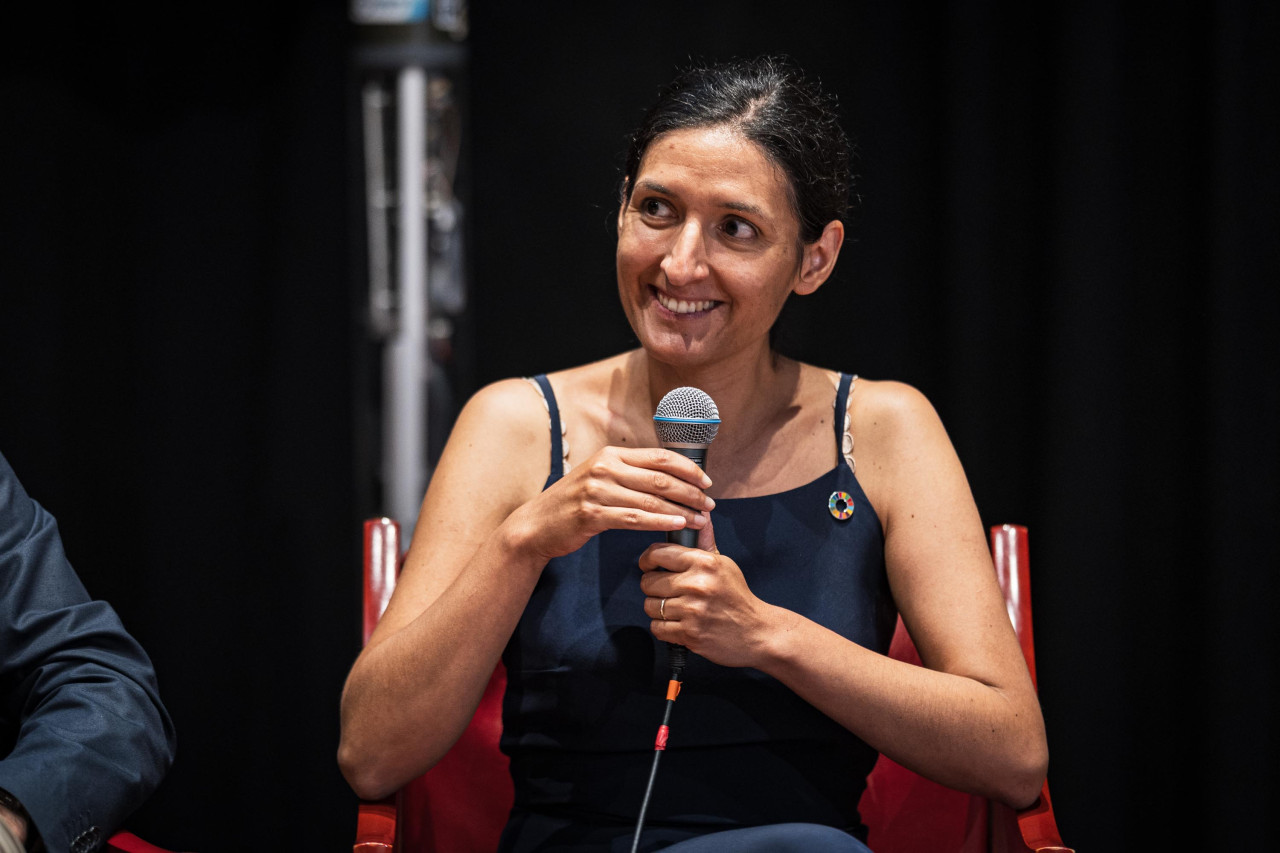
But while data is accumulating, its relevance remains a challenge. Lucie Cocquempot, coordinator of observation networks at Ifremer, warned of a paradox of our time: science has never had so much information about the ocean, and yet its condition continues to deteriorate. “It’s no longer just a question of volume, but of targeting, quality, and data independence,” she emphasized.
She also pointed to a strategic challenge: in the face of growing threats to scientific funding, particularly in the United States, Europe must safeguard its observation capabilities. This calls for new partnerships, hybrid funding models, and active participation from civil society. And in this field, IMOCA skippers are leading the way.
 © Julien Champolion - polaRYSE
SKIPPERS IN THE SERVICE OF KNOWLEDGE
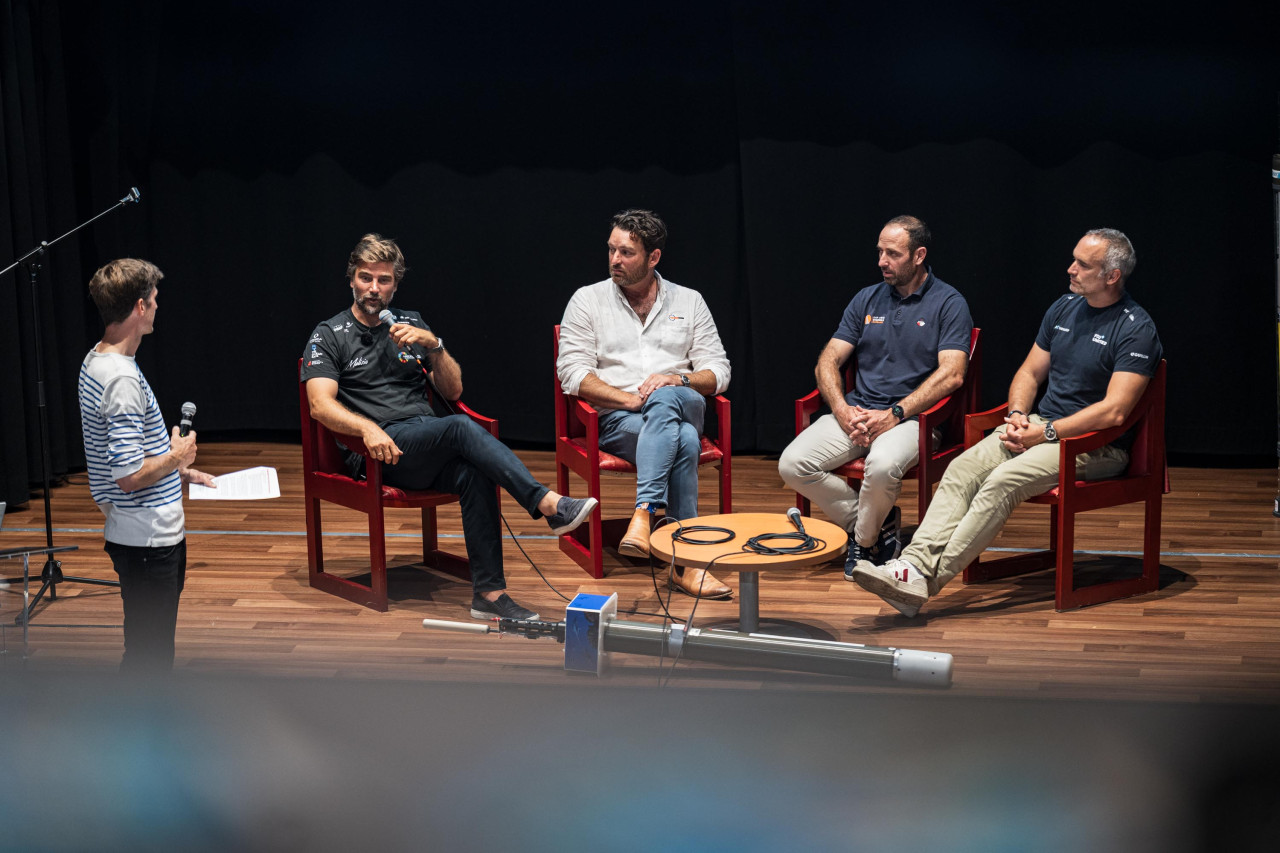
On stage, Boris Herrmann, Fabrice Amedeo, and Sébastien Marsset illustrated how environmental commitment has become central to their sailing practice. Far from being a mere moral add-on, the scientific dimension is transforming the way they sail. “Our job takes us to extreme places. Deploying a buoy or a sensor there is a way of giving back to the ocean what it gives us,” said Sébastien Marsset, emphasizing the discipline required to carry out such tasks—even in the middle of a storm.
Fabrice Amedeo, who has been engaged in this mission since 2019, has transformed his boat into a true measurement platform, never seeing technology and performance as incompatible. As for Boris Herrmann, he powerfully reiterated Team Malizia’s motto: “A Race We Must Win – Climate Action Now.”
For all three skippers, sailing is no longer just about crossing a finish line—it’s also about sharing knowledge, documenting change, raising awareness, and becoming a bridge between the ocean and the decision-makers on land.
 © Julien Champolion - polaRYSE
AN ACTIVE AND OPEN COLLABORATION
This alliance between sport and science is becoming more structured. Since 2015, the IMOCA Class has been a partner of IOC-UNESCO to turn racing yachts into “ships of opportunity.” The Odyssey project, currently in development, aims to certify 10,000 civilian vessels to join this global observation network — including, of course, IMOCA boats.
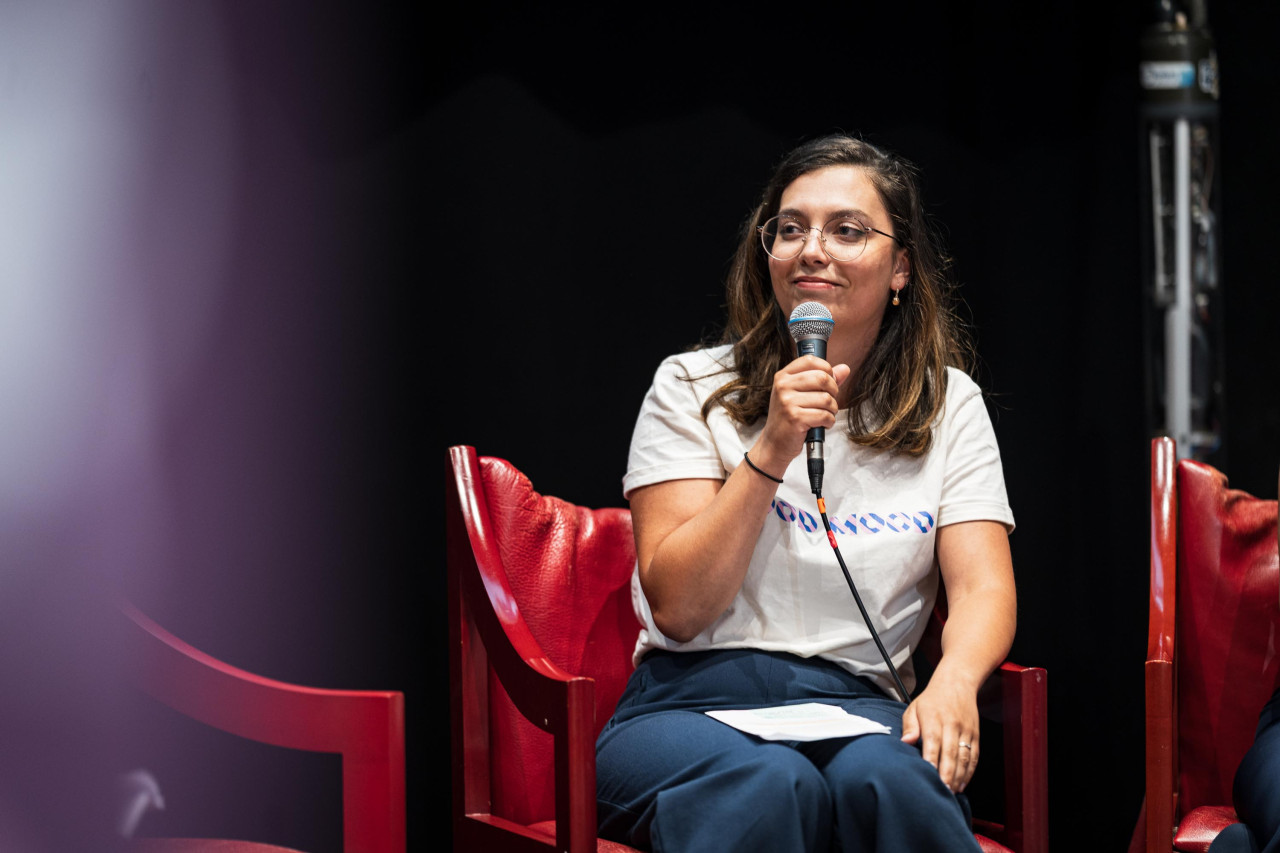
But beyond onboard sensors, an entire ecosystem is being mobilized, from classrooms to laboratories. Manon Audax, science communicator at IMEV, presented the Adopt a Float program, which allows students to track the journey of an oceanographic float. Some of these beacons, released by Marsset or Amedeo during the last Vendée Globe, have been monitored by school classes in Brittany — a clear example of the bridge between the open sea and the classroom.
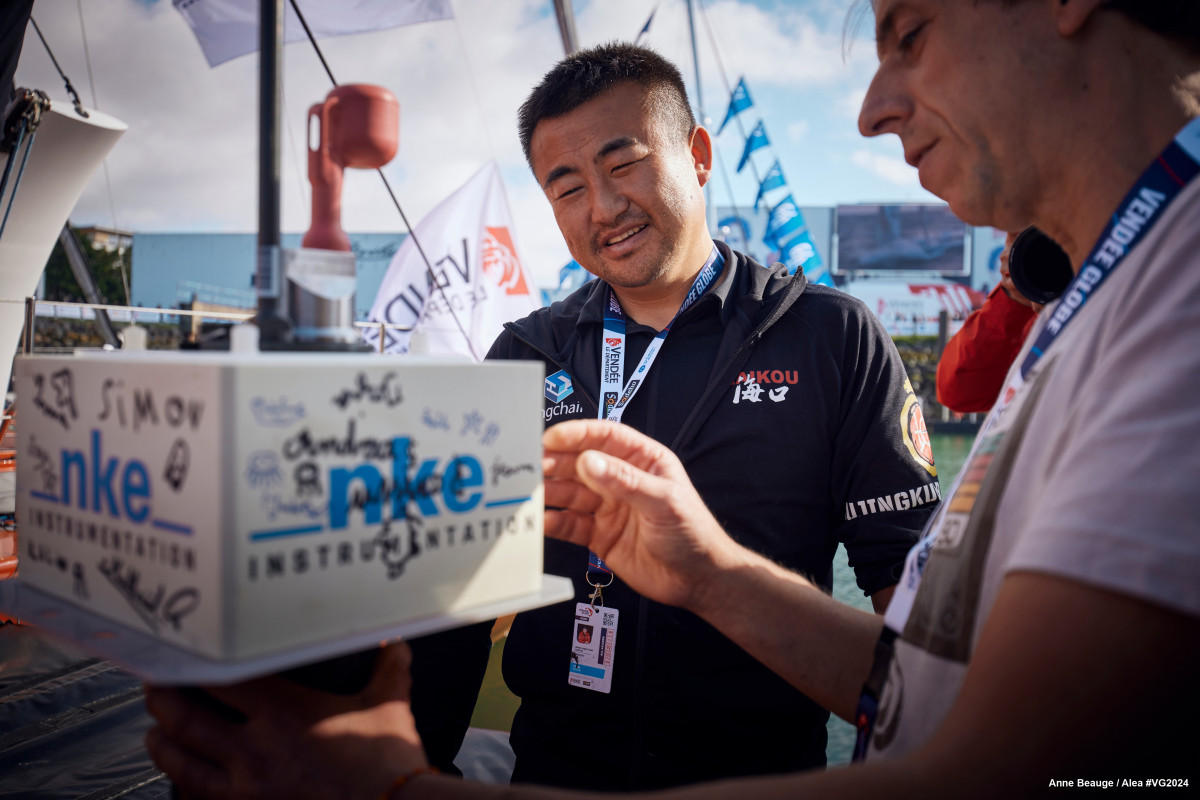
Lucie Cocquempot sees this as a strong signal: “Citizen science is no longer peripheral. It is becoming an integral part of research projects.” This evolution, however, depends on the development of tools that are simple to use, reliable, and supported by credible partners. One such example is the sensor recently tested by Romain Attanasio and Antoine Cornic: automatic, low-energy, and non-intrusive, it could one day be fitted on recreational sailing boats.
The final message is clear: protecting the ocean is no longer the sole responsibility of scientists. Sailors, children, businesses, teachers, and citizens — everyone can play a role in this collective effort. To make it happen, we need bold alliances and bridges between worlds that until recently barely interacted.
The Villefranche conference sketched out one possible path: that of a committed, concrete offshore ecology, grounded in knowledge and action. By transforming its yachts into ocean sentinels, the IMOCA Class embodies this promise.
 © Julien Champolion - polaRYSE
translated by AI
Teams info
Non-French contenders for the podium in the Route du Rhum underlines the international strength of t…
This year’s Route du Rhum - Destination Guadeloupe, which sets sail from St Malo on November 1st, includes four non-French flagged boats, three of which could make the podium in the 3,540-nautical mile sprint across the …
•••Pre-start favourite Sam Goodchild has unfinished business with the Route du Rhum
This year’s Route du Rhum-Destination Guadeloupe - the 13th staging of the classic solo transatlantic race - has attracted a strong field of 22 IMOCA entries, among them the Class’s top performer over the last two season…
•••


