
Energy levels are rising again as the arctic circle draws near
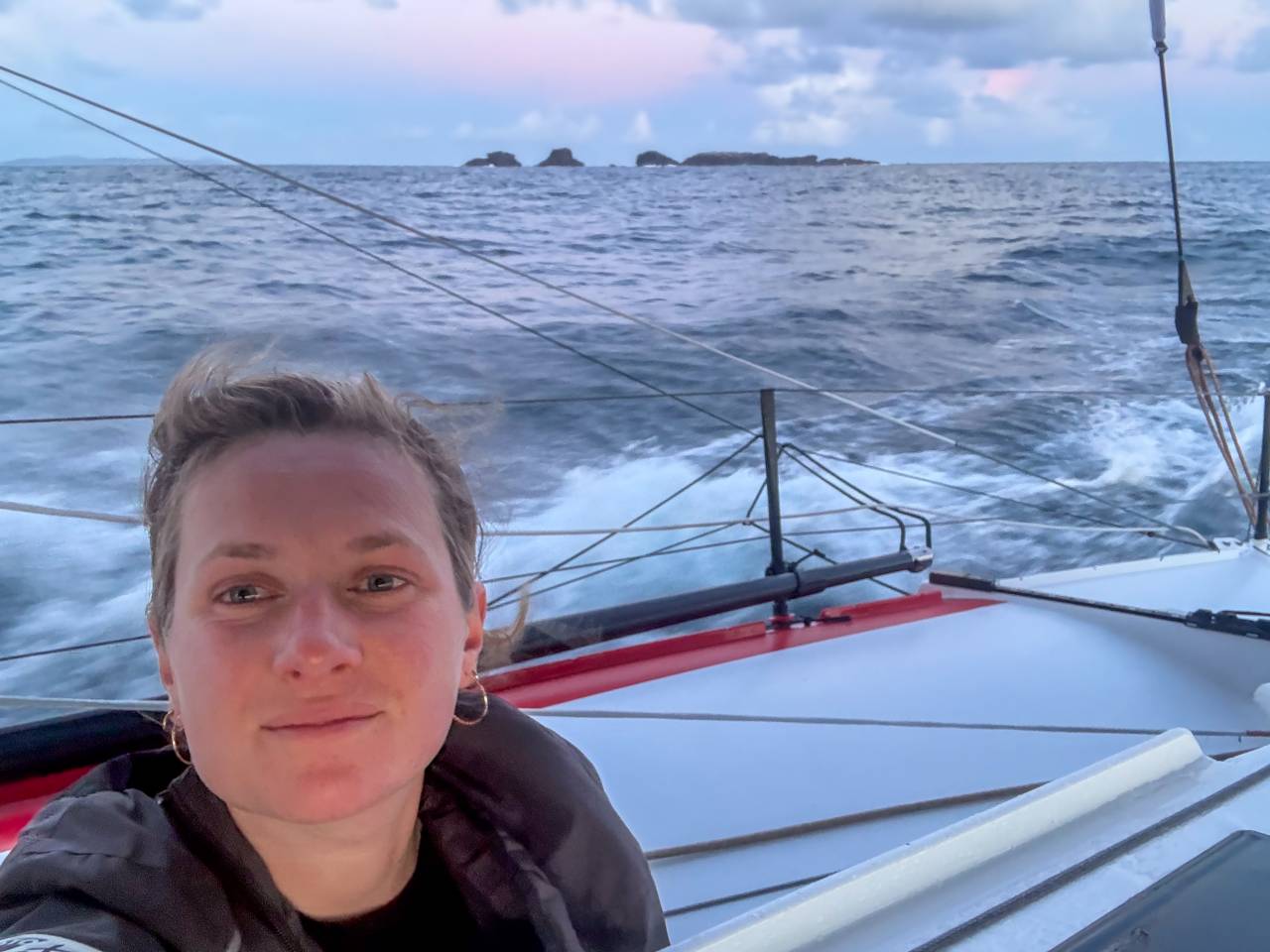
After two and a half days of being thrown around in every direction, the sailors competing in the Vendée Arctique – Les Sables d’Olonne are finally enjoying a little respite.
Since leaving Les Sables d’Olonne on Sunday, the eight remaining solo skippers have endured a long stretch of racing that has been as physically demanding as it has been uncomfortable, marked by strong winds but above all by a particularly heavy sea state. A brutal combination that turned life on board into an exercise in contortion. This Wednesday morning, however, the picture has changed. At the front of the fleet, the leaders are now dealing with little more than 15 knots of breeze and a sea that has become almost flat. The days of violent impacts and moving around the boat in full survival mode appear, for the moment at least, to be behind them. Now comes the time for smooth sailing, recovery naps and increasingly important strategic decisions. Because the Arctic Circle is now close at hand. The leaders are expected to cross it as early as tomorrow before beginning their descent back towards Les Sables d’Olonne.
Recharging the Energy Bar
For more than 24 hours, the IMOCA fleet has put its skippers through an accelerated course in physical endurance. On board, everything was flying, crashing and demanding energy. “The strong wind and the sea were difficult,” explained Elodie Bonafous (Association Petits Princes – Quéguiner), who once again managed to maintain an impressive pace through the demanding conditions and sits in second place this Wednesday morning, around fifty nautical miles behind Sam Goodchild (MACIF Santé Prévoyance). “But it was really the combination of both that made things hard.
“Moving around the boat was tricky. Every time there was a big slam, you had to be careful not to get injured. Anything that wasn’t perfectly stowed was flying around inside the boat. You spent your time crawling around trying to recover your gear.“It was exhausting because, in the end, you stayed tense from morning to night, both physically and mentally.” The same observation came from Arnaud Boissières (APRIL Marine), who eventually put on a helmet to reduce the risk of injury. “It was slamming hard. With the fatigue and the waves, I was worried about getting hurt.”
For Nicolas d'Estais (Café Joyeux), another opponent had to be dealt with: seasickness. “I was really sick. I couldn’t eat properly. We’ve been racing for more than two days now and I still haven’t had a hot meal.”Fortunately, that difficult chapter now seems to be over. “The sea has calmed down significantly. We’ve got 13 knots of wind and the boat is gliding along incredibly smoothly,”smiled Elodie. “It finally allows us to sleep and recover some energy points.” The image is a fitting one. Like in a video game, the gauges are slowly climbing back up. The naps are becoming more frequent. Bodies are recovering. And the smiles are returning.
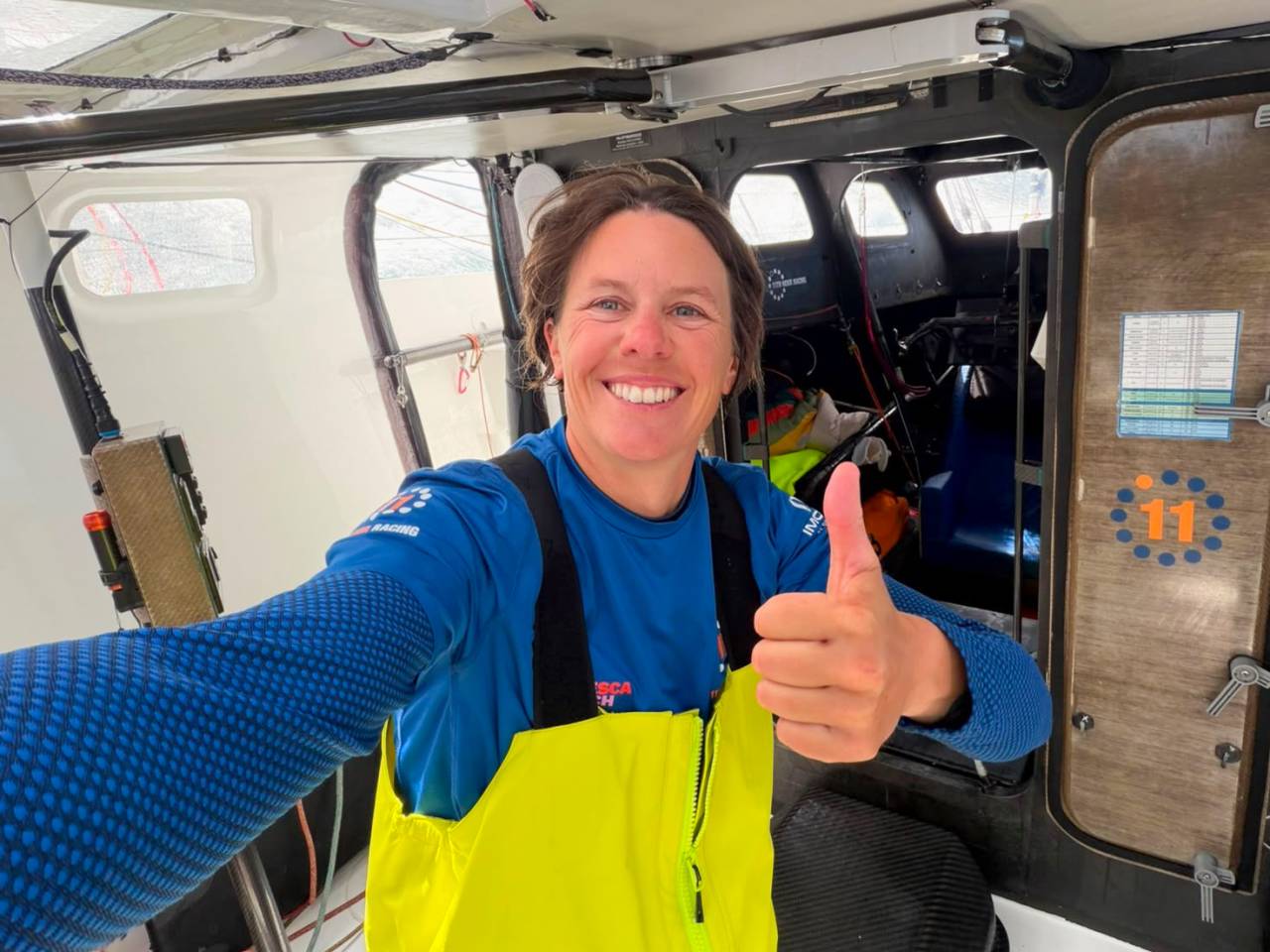 © © Francesca Clapcich #VALS2026
The High North Is Approaching Fast
The return of calmer conditions does not mean progress has slowed. Quite the opposite. Barely more than two days after leaving Vendée, the leaders are already sailing abeam of Lewis and Harris, the main island of Scotland’s Outer Hebrides. Soon they will leave the Faroe Islands to port and continue their climb towards the Arctic Circle. For now, all eyes are focused on a single objective: determining the best crossing point.
Because behind that simple line of latitude lies a genuine strategic puzzle. The quickest route to reach 66° North is not necessarily the route that will provide the best platform for the return leg towards Les Sables d’Olonne. One thing, however, is now certain: the option of passing west of Iceland is no longer under consideration. “That possibility belongs to ancient history,” joked Elodie Bonafous. “It’s clearly no longer an option.”For it to have become relevant, a deeper and more southerly low-pressure system would have needed to establish itself for a prolonged period. That scenario never truly materialised. Added to this are the whale protection zones located west of the land of glaciers and volcanoes. In the end, the necessary ingredients for that option were never present.

The fleet therefore continues northward in favourable west to south-westerly winds before eventually connecting with stronger airflow generated by a relatively stationary depression—a fairly classic weather pattern in this part of the world. One major uncertainty remains: the precise position of that low-pressure system over the coming hours. Its location will largely determine the ideal crossing point of the Arctic Circle. The objective is to remain in favourable reaching conditions for as long as possible and avoid the headwinds located on the western side of the system. Yet the further east the sailors move to secure better wind angles, the more distance they add to their route. It is a delicate compromise that still requires careful refinement. “I’m still leaving myself plenty of room to manoeuvre,” explained the skipper of Association Petits Princes – Quéguiner. “I still have time to study it before I get there.”
Enjoying the Journey
Further back in the fleet, Arnaud Boissières, Nicolas d'Estais and Manu Cousin are now experiencing a slightly different weather pattern. They too, however, are benefiting from far more manageable conditions. For Nicolas d’Estais, the only skipper in the fleet sailing a daggerboard IMOCA, the relief is particularly noticeable. “I’m slowly starting to recover physically. It’s getting better and better. Now it’s time to enjoy the journey.” The Café Joyeux skipper is currently sailing past Green Island, allowing him at last to lift his eyes from the instruments and take in the scenery. “I think it’s the sixteenth time I’ve sailed past Ireland, and I’ve never actually stopped there. I’ve seen the lighthouses and the cliffs. It looks magnificent. It makes me want to come back.” The same sense of wonder is evident aboard APRIL Marine.
Over the coming hours, the landscape will continue to evolve. Sea temperatures, still close to 12°C today, are expected to fall to around 10°C near the Faroe Islands before approaching 5°C at the Arctic Circle itself. The High North is now very close. For the eight sailors still at sea, the adventure continues. Gentler than yesterday, certainly. But every bit as intense.
Note: Corentin Horeau (MACSF), who retired after the J3 chainplate—the attachment point for the headsail—was torn from the deck, returned to Lorient yesterday evening at around 22:30.
Teams info
Countdown begins as The Ocean Race sets its sights on 2027 start in Alicante
Following The Ocean Race Atlantic, attention shifts to Alicante, the Puerto de Salida (start port) for the around the world race
•••Thomas Ruyant: “I will not be at the start of the next Route du Rhum”
My disappointment is immense. This race holds a special place in my history. I have competed in it and won it twice. As the defending champion, I was obviously very keen to come back and defend that victory.
•••


