
Sailing to the Arctic Circle – the magic of the Vendée Arctique
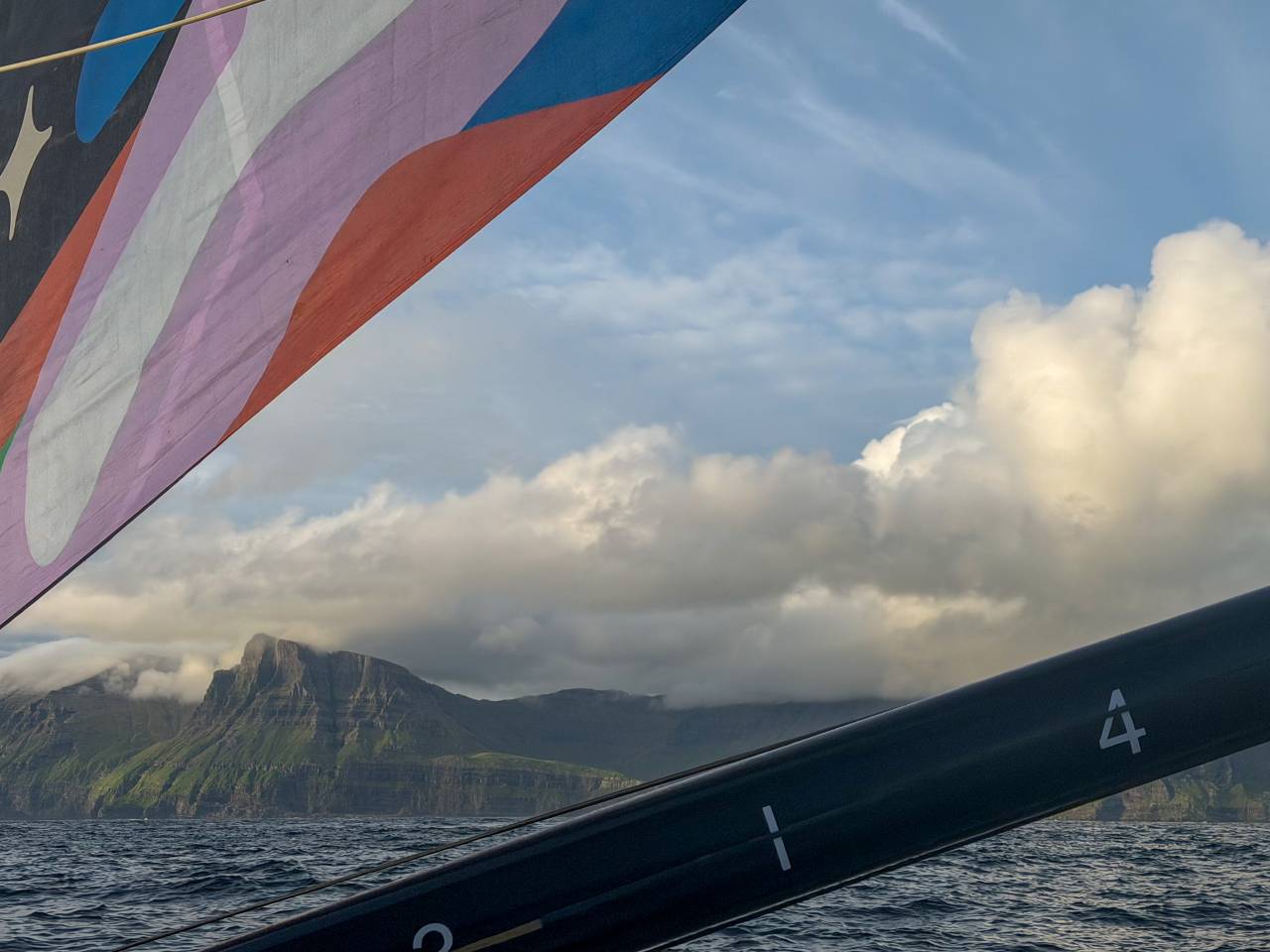
The Vendée Arctique-Les Sables d’Olonne – currently mid-way through its third edition – is a yacht race like no other, that takes IMOCA skippers into waters no other sailing event touches.
With a simple yet daunting course, from the Bay of Biscay to the Arctic Circle and back, the Vendée Arctique climbs to the invisible line around the earth at approximately 66.5 degrees North.
It’s the southernmost latitude where the sun can continuously stay above the horizon for 24 hours in the summer, or continuously stay below the horizon in the winter and, in this respect, it is the mirror opposite of the Antarctic Circle in the southern hemisphere.
For the eight remaining skippers in this Vendée Arctique – being led by Sam Goodchild on MACIF Santé Prévoyance, who is on his way back south after crossing the Arctic Circle on Thursday – this race offers a completely new perspective on sailing and the ocean.
On board fifth-placed 11th Hour Racing, the Italian-American skipper Francesca Clapcich admits that actually going this far north, where the days are never-ending and the summer air is heavy and cold, has taken her by surprise.
“I am not sure if I feel closer to the North Pole up here,” she said, as she approached the virtual turning point off the northeast coast of Iceland, “but when I look at the chart and the latitude I am right now, I am like ‘Jesus, this is really far up here.’ And you don’t realise it until you look at the perspective of the entire globe and where we are as a little boat dot on the screen.”
Clapcich says conditions remind her of the deep south that she is familiar with from The Ocean Race. “It’s quite special to sail this far north. First of all I’ve never been here before and the environment is just so different. I was expecting something similar to the Southern Ocean, grey skies and low pressure systems coming through and hard, harsh days on the boat…and it pretty much delivers that,” she said.
But Clapcich also made the point that this race is a unique life experience to treasure and value. “There are only a small bunch of people that sail on these kinds of boats in IMOCA around these places in the world, and we cannot forget what a privilege and how special it is to be here and doing this, so I am really enjoying it,”she explained.
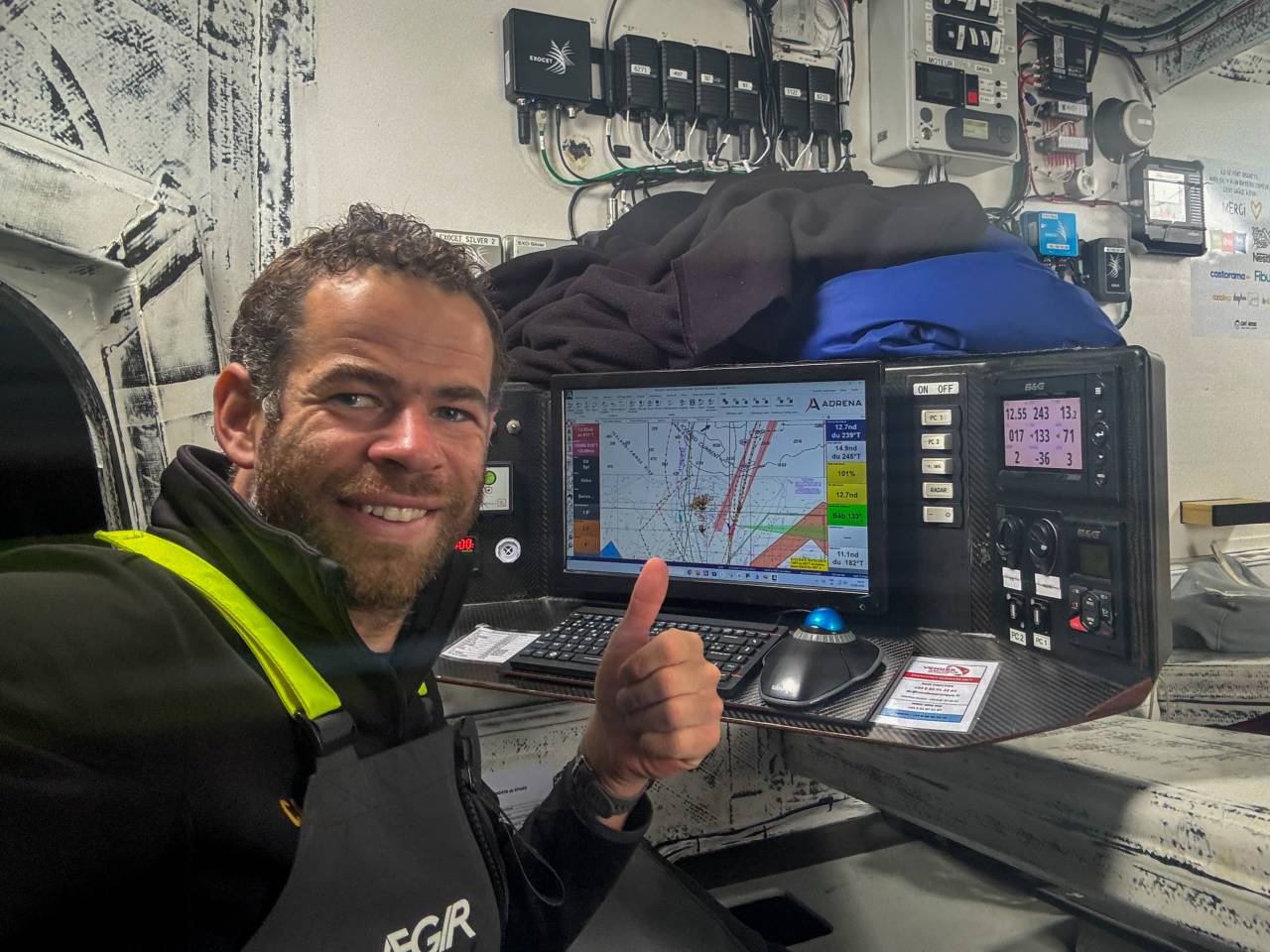 © © Nico d'Estais #VALS2026
Behind her in sixth place, on the only daggerboard boat in the fleet, Frenchman Nico d’Estais on board Café Joyeux, says it feels strange to be in such a remote part of the world. “I looked at the map and thought we weren’t that much farther from home than when we cross the Atlantic, but oddly enough it still feels like we’re farther away,”he told the Class.
“It’s pretty great, I’m really happy to be here, it’s a real pleasure with magical contrasts,” he added, “especially as I grew up as a child inspired by the stories of great explorers like (Ernest) Shackleton, the polar explorers of past centuries.”
D’Estais has less than 100 miles to go to the virtual turning point and he’s expecting the temperature to drop even further as he continues on his way north. “When I go round the low pressure system that separates us from the Arctic Circle, on the north side of that depression, I will feel winds coming straight from Norway and I think that will be the true north,”he said. “For now, I only have the positive sides – there is no night which is quite nice when you need to trim the sails – you can actually see what’s going on. It hasn’t unsettled me much – I’ve adapted well and I prefer it being daylight all the time, than night all the time.”
Back on 11th Hour Racing, Clapcich says she has been wearing a balaclava and neoprene gloves, plus a mountaineering jacket and mountaineering trousers when she goes on deck to set up sails. She said it was weird sailing through a big frontal passage with 30 knots of wind in daylight during what was supposed to be the middle of the night.
“But it was just twilight,”she said. “You can tell that it is later in the day because it is a bit darker, but it is crazy to have daylight all the time. I don’t know how people live with their Circadian cycle in Iceland and all these places – we are so used to sleeping when it is dark and being awake when it is light – our lives are based on that.”
Clapcich is aware that she is sailing through waters that are rich in sea life – the large number of fishing boats is a reminder of that – but the demands of the race, and of sailing her complex foiling IMOCA alone, means there has been little time to watch out for mammals and sea birds. “I saw my friends the puffins, but I haven’t seen much other wildlife,” she said. “That doesn’t mean it is not there – it’s just that I don’t spend a lot of time on deck.”
We asked D’Estais, meanwhile, whether he feels more vulnerable being so far off the beaten track on this qualifier for the next Vendée Globe. The Café Joyeux skipper says in some ways he does, but in some ways not. “No, because the only real major danger is falling overboard, and that can happen even close to the coast,” he said.
“But it’s true that you’re further from home if something goes wrong; if something breaks, you can’t just turn back and fix it at home,”he added.
Ed Gorman
Teams info

LIVE: Watch the finish live!
The suspense is at its peak and you won’t miss a thing! To find out how the third edition of Vendée Arctique unfolds, our teams are bringing you live video coverage, both at sea and on land. Follow the leaders’ final mil…
•••It’s all to play for in the final stages of the Vendée Arctique
Seven days since the start of the Vendée Arctique-Les Sables d’Olonne, and the race to the Arctic Circle and back is poised at a fascinating stage, and with a very uncertain endgame in light winds to come at the finish.
•••Championship ranking
| 01 |   | Sam GOODCHILD
MACIF SANTÉ PRÉVOYANCE | 50.00 pts |
| 02 | | Corentin HOREAU
MACSF | 45.00 pts |
| 03 | | Violette DORANGE
INITIATIVES-CŒUR | 40.00 pts |
| 04 | | Elodie BONAFOUS
ASSOCIATION PETITS PRINCES - QUÉGUINER | 38.00 pts |
| 05 |   | Francesca CLAPCICH
11TH HOUR RACING | 36.00 pts |
| 06 | | Nico D'ESTAIS
CAFÉ JOYEUX | 35.00 pts |
| 07 | | Arnaud BOISSIÈRES
APRIL MARINE - RECHERCHE CO-PARTENAIRE | 34.00 pts |