
Building together, to compete against each other tomorrow
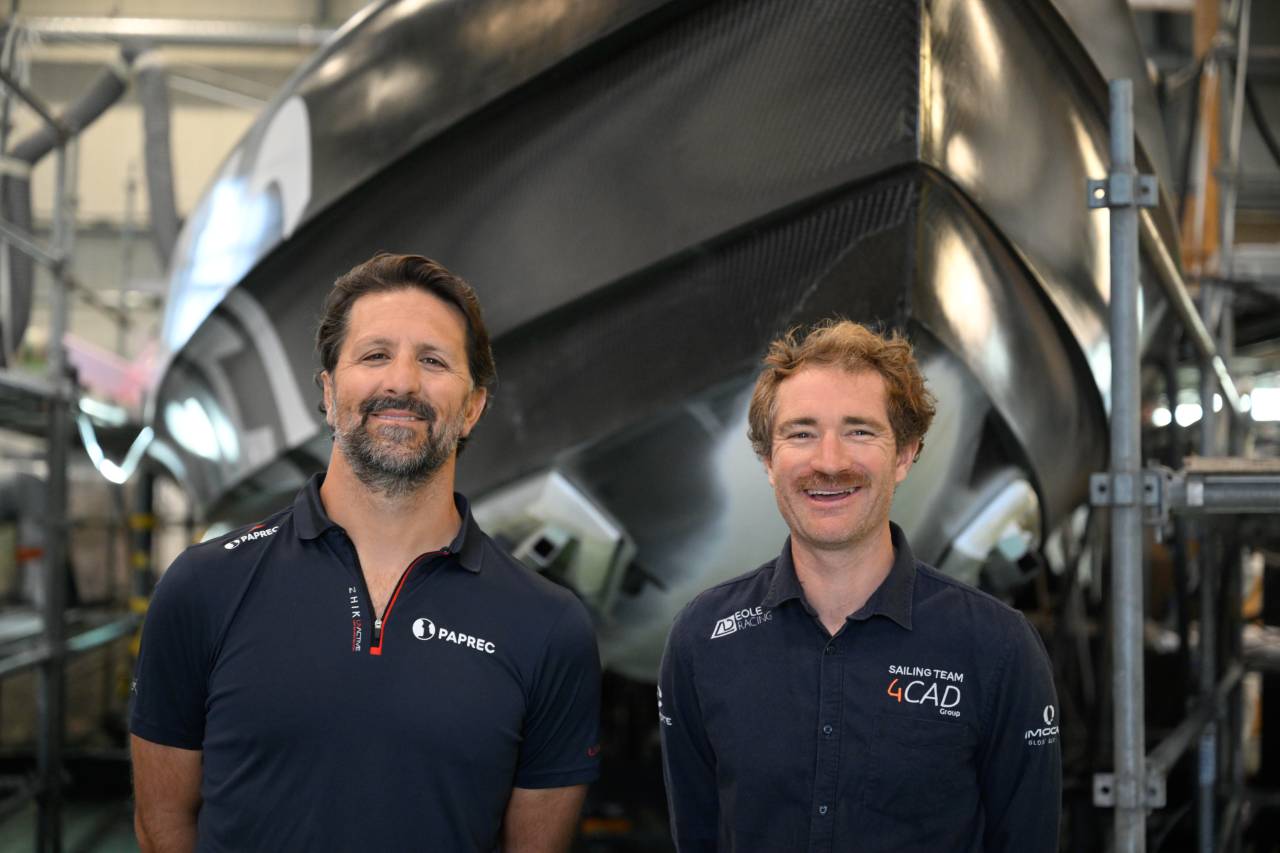
Two teams, two skippers, two distinct sporting projects… yet a very large part of the journey shared together. By choosing to join forces with Paprec in the design and construction of two virtually identical future IMOCA, 4CAD Group and Benjamin Dutreux have embraced a collaborative approach that remains uncommon at this level of competition.
The specifications, architectural choices and level of ambition of the project matched what they were looking for. Since then, each side has contributed to the project. Paprec’s accumulated experience is combined with the fresh perspective and enhanced expertise of Benjamin’s team, while Antoine Koch and Multiplast provide the link between the two programmes. The result: two sisterships that are 99% identical, developed within the same framework and driven by a shared conviction: combine strengths today to better compete against each other tomorrow.
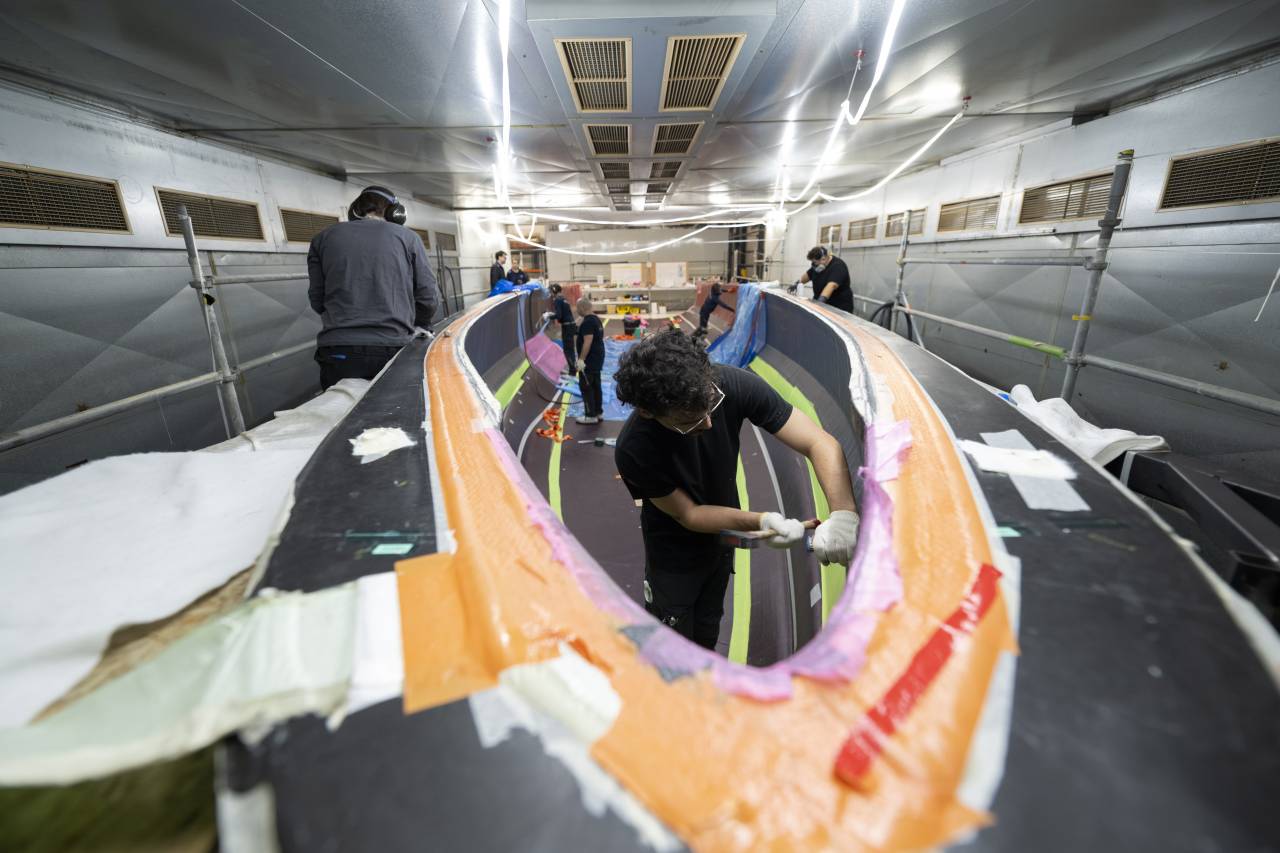
Designed by Antoine Koch and built at Multiplast, the two IMOCA share the same design, engineering studies, tooling and a very large majority of their technical solutions. Only certain equipment, interior layouts, sails and choices directly linked to the skippers’ preferences will set them apart. This shared approach is expected to improve the two boats’ LCA (Life Cycle Assessment) footprint by 25% and reduce construction costs by 12%, while meeting the IMOCA Class eco-score requirement, which calls for a 15% reduction in the carbon footprint of new boats. Launches are scheduled for March 2027 for Paprec and July 2027 for 4CAD Group.
A Common Foundation, Two Ambitions
When Benjamin Dutreux and 4CAD Group began exploring the different options for their future IMOCA, several possibilities were on the table. The project initiated by Paprec quickly caught their attention. Its main principles matched their expectations, they were drawn to Antoine Koch’s design choices, and the decision to work with Multiplast provided an additional guarantee. Above all, the prospect of jointly undertaking such a significant part of the design and construction process immediately made sense. “When we started looking at what building a new 60-foot monohull would involve, it seemed almost unthinkable not to share such a project. We looked at several options, and this was the one that suited us best. The specifications and choices already made were aligned with what we were looking for. There was also Paprec’s experience, a renowned shipyard, and the ideas of an architect I greatly appreciate. All the elements were there,”explains Benjamin Dutreux. For 4CAD Group, this choice also has particular significance. Sharing the engineering studies, tooling and a large part of the manufacturing process not only helps streamline the process, but also reduces its economic and environmental impacts. “Sharing resources brings very tangible benefits. Designing two almost identical boats and using the same mould makes it possible to optimise both the engineering and manufacturing processes, while also reducing costs and the amount of material required. In an industry where some materials still have a significant environmental impact, using fewer resources and sharing tooling is a genuine approach to eco-design and eco-manufacturing,” says Stéphane Letheule, CEO of 4CAD Group.
Bringing Expertise Together
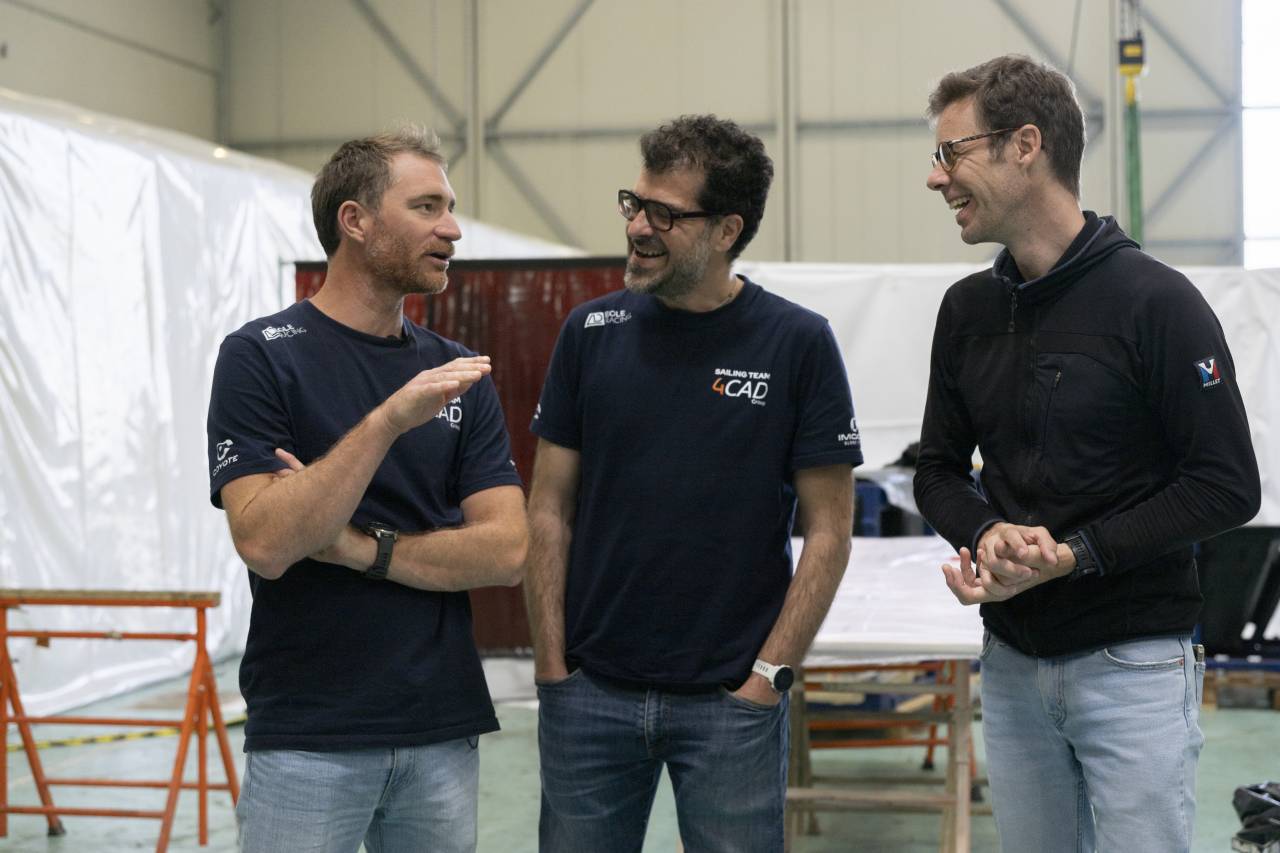
Sharing resources does not simply mean building the same boat twice. That is precisely the value of the approach: bringing different areas of expertise together around a common platform to challenge solutions, generate new ideas and inform key decisions. “We are very pleased to be able to benefit from Paprec’s experience for this first IMOCA build. But we have also structured our team so that we can be fully involved in the project and bring our own expertise. The idea was not to challenge things for the sake of challenging them, but to better understand the issues, be able to put forward ideas and make the best decisions together,” continues Benjamin Dutreux. Daniele Capua, naval architect within the team’s design office, explains what each side brings to the equation: “Paprec has extensive experience in overseeing construction and knows how to anticipate a number of manufacturing or installation issues. On our side, we sometimes bring a fresher perspective. As we have never built an IMOCA with Benjamin before, we do not always have pre-established solutions in mind, and that leads us to question certain things again. By combining these approaches, we can come up with interesting solutions. “The boat itself also represents a significant evolution from the previous one: we are moving from a wide hull with a chine to a slender hull with three chines. This helps produce a lighter boat, to which we can fit more powerful, more load-bearing foils. The aim is to improve overall efficiency, rather than simply evolve one element in isolation.” The team’s structure and the recruitment carried out in recent months have therefore progressively strengthened its ability to contribute to discussions and play a full role in the joint decision-making process.
An Open-Book Approach
This complementarity can only work under one condition: a willingness to share information. For a large part of the development process, the two teams have chosen complete transparency. “Things have really clicked between us. For everything related to the shared development, we have chosen to work with complete openness. If we see something that could improve the boat, we immediately put it on the table, and Paprec does exactly the same with us. Instead of having two design offices working separately, we are combining our brains, skills and experience,”explains Benjamin Dutreux. This approach is particularly strong when it comes to safety, structural integrity and reliability. “In a way, we have taken reliability out of the competition. If either team identifies a concern about the safety or reliability of a system, it immediately shares it with the other. That is not where we want to win races,” says Daniele Capua. Around 70% of the technical solutions are therefore being developed jointly. Such cooperation also requires rigorous organisation: the two boats follow the same main stages, but with a few months’ delay between them, requiring the teams to coordinate their decisions and the manufacture of the various parts.
Sharing Without Standardising
Sharing so much does not mean building two completely interchangeable boats, however. Benjamin Dutreux and Yoann Richomme do not sail in exactly the same way, nor do they necessarily have the same preferences. Ergonomics, the organisation of certain manoeuvres, onboard systems, engine configuration and sails: part of the configuration will remain specific to each boat. “For a large part of the technical subjects, it would be absurd to do the same work twice only to arrive at virtually the same solution. On the other hand, certain choices need to be adapted to the skippers. Everyone sails differently, and everyone has their own preferences. This is where the two teams regain greater autonomy and customise their boat,”explains Daniele Capua. This is where the shared approach naturally reaches its limit. Once the common platform has been defined and proven reliable, the Team will be able to fully make the new IMOCA its own and shape it around Benjamin Dutreux’s expectations and sporting project.
Twice the Data, Twice the Opportunity to Progress
The cooperation will not stop at the shipyard doors. Once both IMOCA are on the water, sailing will generate a wealth of real-world feedback and provide new insights into the solutions selected. With two sisterships that are so closely matched, the teams will be able to compare their behaviour, cross-reference data, solve problems more quickly and continue the reliability work on an exceptionally rich basis. For the team, this new phase will extend the approach initiated during construction: understanding, analysing and progressing from a much broader body of information. For Stéphane Letheule, this way of working has a direct parallel in the industrial world: “Companies are increasingly working as ecosystems, bringing different areas of expertise together around the same project. That is exactly what we see here: everyone brings something, and the whole becomes stronger than the sum of its parts.”This is a particularly familiar approach for 4CAD Group, whose business is precisely to support manufacturers in their design and production processes, using digital tools, data management and the pooling of complementary skills. Until the boats are launched, 4CAD Group and Paprec will therefore continue to work side by side to solve a large part of the challenges posed by these two new IMOCA. Then the choices specific to each boat will become increasingly important, and the aim will be to make the most of what has been built together. Today, their strengths are combined. Tomorrow, on the water, each will seek to make the difference.
PROJECT TIMELINE
Winter 2024 – Spring 2025: Initial discussions between the Paprec design office and Antoine Koch.
Summer – Fall 2025: 4CAD Group decides to join the project; agreement between the two teams to build two nearly identical boats.
Winter 2025: Finalized 3D design. Spring 2026: fabrication of the hull and deck molds at Multiplast.
April through September 2026: fabrication of the bulkheads and keel box, and start of hull construction
September through November 2026: Finalization of the hull, curing of the stringers, and start of structural assembly in the mold
December 2026 to January 2027: Removal of the hull and deck from the molds
March 2027: Deck installation, delivery of foils, and installation of the cockpit
June 2027: Painting of the IMOCA
July 2027: Launch of the IMOCA 4CAD Group
Teams info
Countdown begins as The Ocean Race sets its sights on 2027 start in Alicante
Following The Ocean Race Atlantic, attention shifts to Alicante, the Puerto de Salida (start port) for the around the world race
•••Thomas Ruyant: “I will not be at the start of the next Route du Rhum”
My disappointment is immense. This race holds a special place in my history. I have competed in it and won it twice. As the defending champion, I was obviously very keen to come back and defend that victory.
•••


