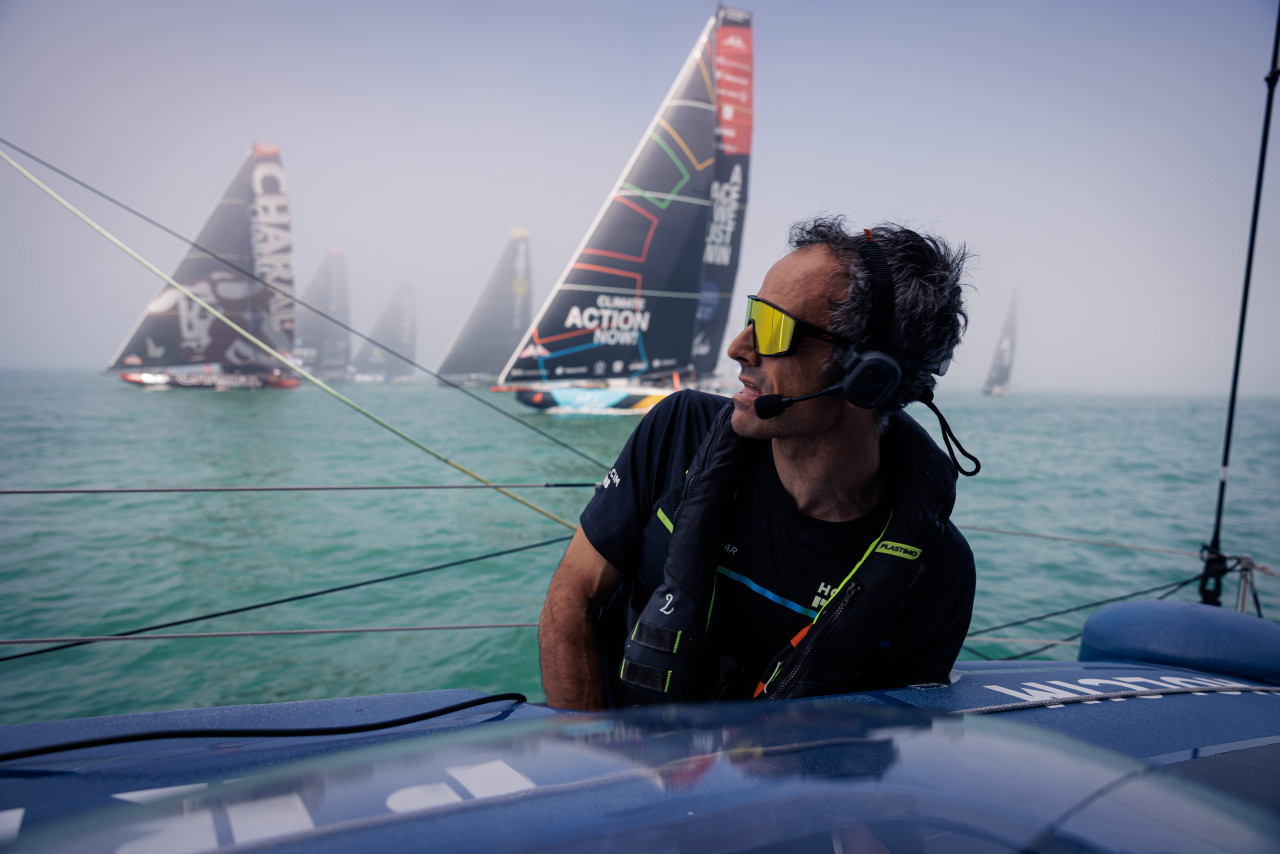
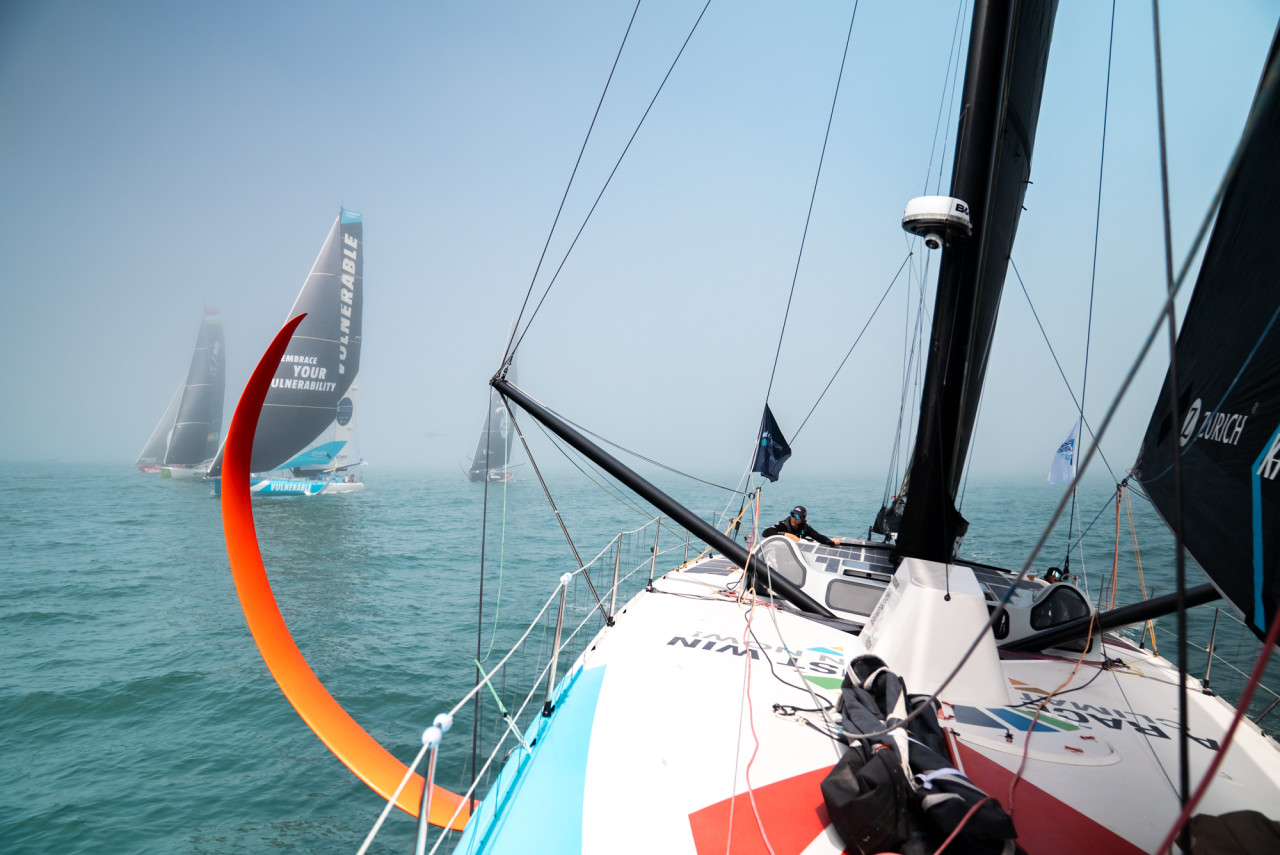
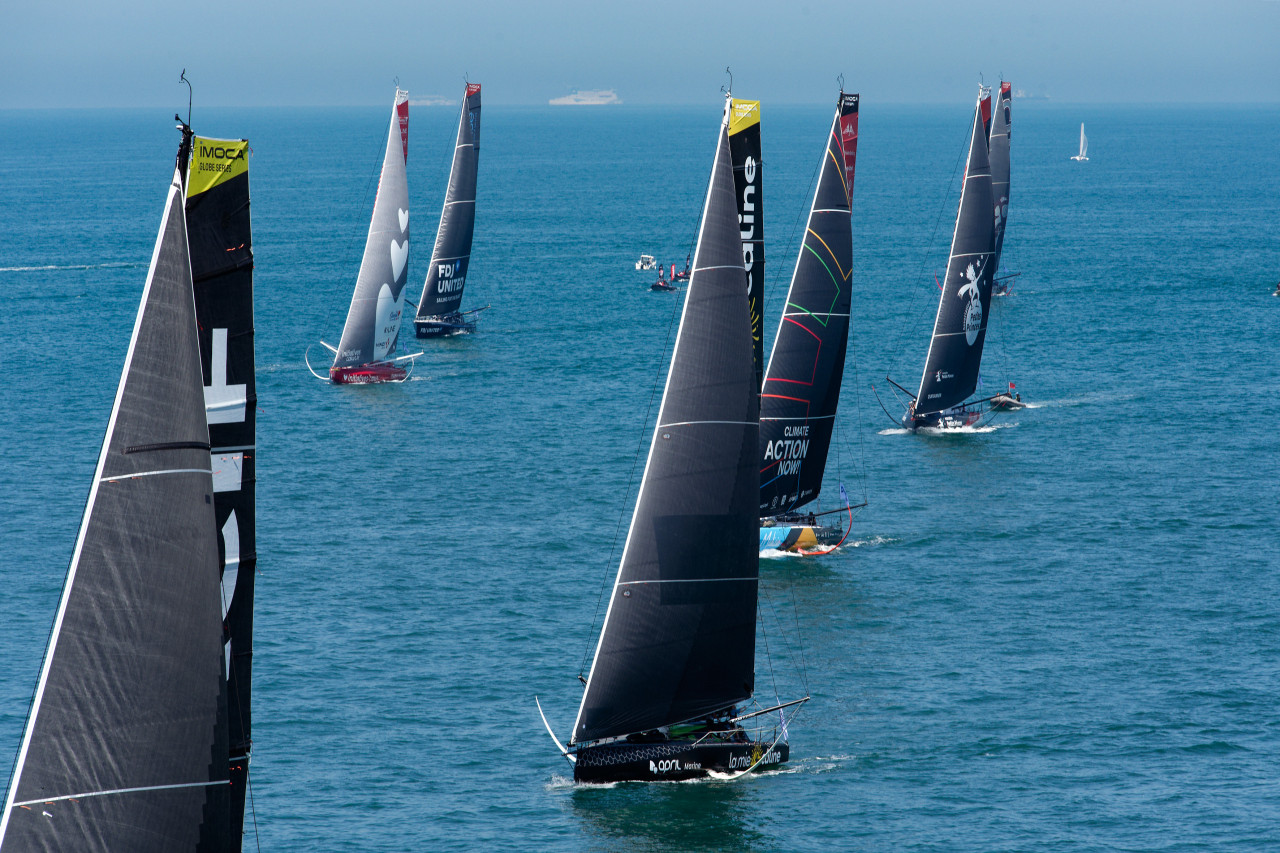
Under a veil of mist that still lingered at 2 p.m., the first edition of the Course des Caps – Boulogne-sur-Mer – Banque Populaire du Nord set off this Sunday, June 29, in a barely perceptible breeze.
In front of a large crowd that turned out despite the reduced visibility, the eleven IMOCA boats crossed the start line slowly, hinting at a showdown as breathtaking as it will be unforgiving. From the very first miles, the English Channel is asserting itself as a true strategic battlefield, where the current—often stronger than the wind—can turn even the slightest decision into a decisive blow and make every mistake unforgivable. In this delicate context, the sailors are stepping into a real open-air chess game, where patience, precision, and daring will be their only weapons in hopes of escaping this tricky zone and gaining an early edge in this 2,000-mile course around the British Isles.
A shrouded start, but tension runs high
As soon as the line was crossed, the IMOCA fleet moved forward slowly in a muffled atmosphere, the fog adding to the surreal feel of the start. Carried by a light breeze of 4 to 6 knots, they are still sailing in a deceptively calm setting, with tension running high: each sailor knows that the slightest misstep in positioning could leave their boat at the mercy of the current and cost them precious time.
“These first few miles are looking a bit uncertain, with more current than wind, which demands a particular mindset from the outset. It may start calmly, but not entirely, because if you get caught off guard, you can quickly find yourself in trouble,”analyzed Thomas Ruyant (VULNERABLE).
A formidable current expected by tonight
Already, the English Channel is enforcing its rules—and by tonight, the adverse current could reach three knots, before strengthening tomorrow morning to six or even eight knots around the Cotentin Peninsula.“This factor, particularly near Cherbourg, will be a major parameter. It reminds me of a Figaro Beneteau scenario where anything can happen. We’ll need to keep all our senses sharp!”warned Loïs Berrehar (MACIF Santé Prévoyance). Nicolas Lunven (Holcim – PBR) echoed the concern shared by many competitors: “The wind could be lacking, which will really test our nerves as we try to catch the slightest puff. Some of us might even need to drop anchor to avoid drifting backward with the current.”
Finding pressure: an absolute must to stay in the race
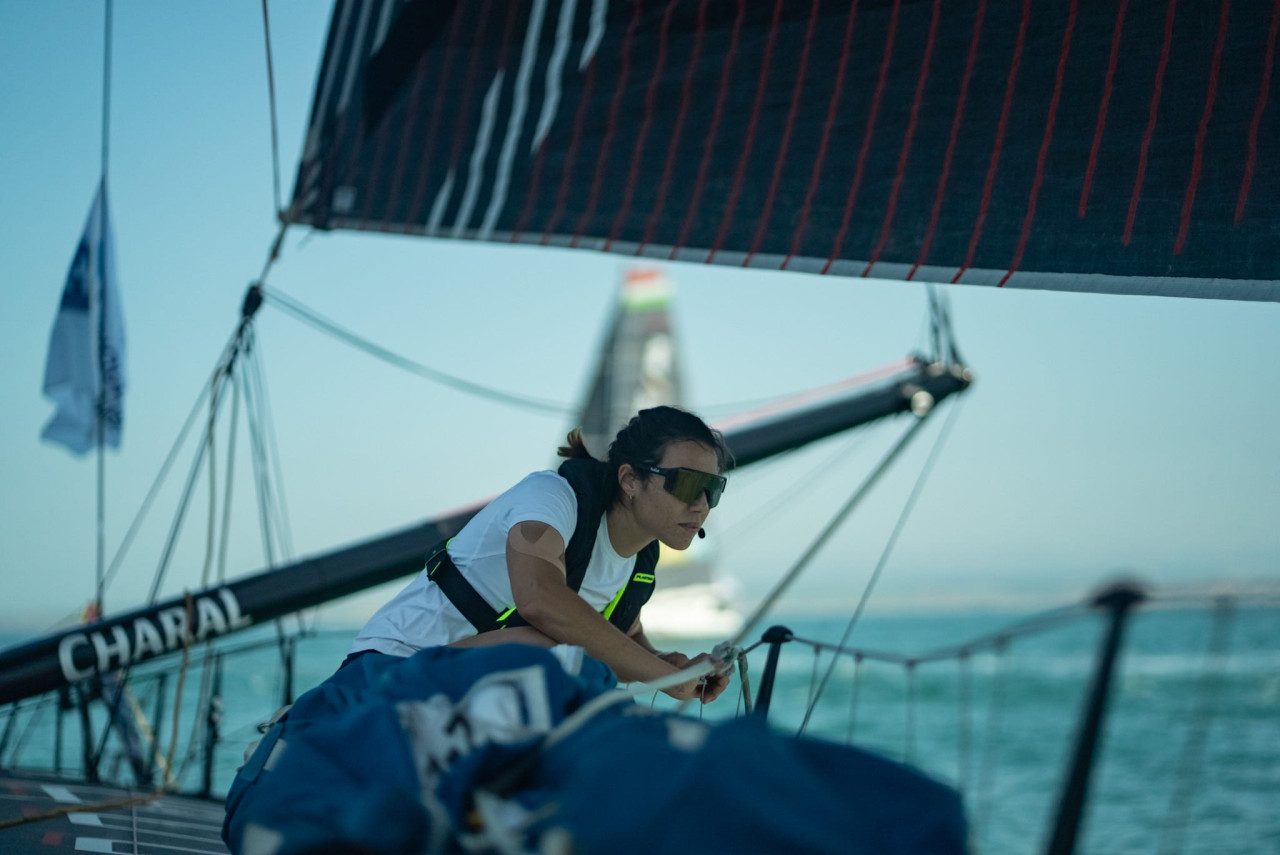
The wind is expected to remain light until the middle of the night, before settling into an East-Northeast flow of 7 to 10 knots. Until then, every breath of wind will be crucial to stay in touch with the lead. Damien Seguin (4CAD – La Mie Câline) emphasized the importance of this opening phase: “These first few hours look especially tricky. The key challenge will be to find just enough pressure to counter the current and be among the first to benefit from the shift.”
He also stressed the unpredictable nature of the situation: “The course feels like a real game of skittles, with obstacles and traps that can appear at any moment. We’ll need to stay calm and focused.” Justine Mettraux (TeamWork-Team SNEF) shares this assessment and expects a constantly evolving scenario:“The smallest change could turn everything upside down. From the first miles, there might be opportunities to seize and even risky passages near the rocks. A lot can happen, and the fleet could split up quickly depending on how well each boat can make headway in these conditions. The sail choices will be crucial.”
First hours where everything can shift
Loïs Berrehar summed up the stakes of this delicate beginning: “Within 24 to 36 hours, things will become clearer, but these first hours are complex. The goal isn't to create a gap right away, but to avoid getting trapped and falling behind.” In this high-stakes opening section, precision, patience, and the ability to catch the slightest gust will make all the difference in staying in the game and tackling the demanding rest of the course from a solid position.
Loïs Berrehar (MACIF Santé Prévoyance): “This race is definitely shaping up to be tactical, technical, and strategic, with quite a few uncertainties ahead. We’ll need to stay sharp and alert. On these boats, which are designed for tougher conditions, it will be important to take our time and keep a close watch on the water before the race settles into a more oceanic rhythm—even if the course remains quite coastal. Within 24 to 36 hours, things should be clearer, but the first 48 hours will be challenging before it opens up a bit more. The top priority during this period will be to find the wind and the right angle to get the boat moving efficiently. Crew coordination will also be key to staying effective. The objective is not to open a gap right away but to avoid getting stuck and losing ground. The route is long and full of traps, so we’ll need to stay focused. The current, especially around Cherbourg, will be a major factor. It reminds me of a Figaro scenario where anything can happen. I’ve never had to anchor in an IMOCA before, but it’s definitely something to consider. We’ll need to keep our chakras wide open!”
Justine Mettraux (TeamWork-Team SNEF) : “It’s going to be interesting: we won’t be starting in much wind, and the slightest difference—just a bit more or less—could change the whole script. From the very first miles, there may be chances to take, opportunities to grab, and even risky passages near the rocks. A lot could happen, and the fleet may quickly spread out at times, depending on the timing and how well each of us manages to keep moving. We’ll need to focus on our own strategy, what feels right, and how to sail the boat efficiently. Even the end of the race remains very uncertain; there might be chances for everyone right until the finish, so we’ll have to stay focused. The key to this beginning will be the ability to adapt and keep adjusting to the light conditions. It’s not often we sail in such light air, and we’ll see who handles it best. Sail selection will also be decisive, especially given the short time between the course announcement and the sail list confirmation.”
After a stunning 2025 season Sam Goodchild is the IMOCA Globe Series Champion for the second time
After a long season at the top of the IMOCA fleet that featured three race wins, Great Britain’s Sam Goodchild is for the second time in three years the IMOCA Globe Series Champion.
Quel rôle peut jouer la course au large dans la transformation du transport international ? Avec Pie…
Pour ce 10ᵉ épisode de Transitions, enregistré au Havre lors du départ de la Transat Café L'Or, nous recevons Jeremy Pochman, PDG de 11th Hour Racing, et Pierre-Antoine Morvan, responsable du pôle course au large et supe…
 © F. Van Malleghem Photographe


